
The Siq: Your Grand Entrance
The Siq is how you enter Petra, and honestly, it’s half the magic. This narrow gorge stretches about 1.2 kilometers, with sandstone walls towering 80 meters overhead. The light shifts as you walk—golden, then shadowy, then pink.
I spent the entire walk craning my neck, spotting ancient water channels carved into the rock and faded Nabataean inscriptions.
Tip: The ground is uneven in places, so wear shoes with good grip. Don’t rush this part. The anticipation builds with every step.
The Treasury (Al-Khazneh): The Moment You've Been Waiting For
And then it happens. You round a bend, and there it is—the Treasury, carved straight into the cliff like someone sculpted it from a single piece of rock. Photos don’t capture the scale. It’s massive, intricate, and glowing in the morning sun.
I got there just after sunrise, and the light was perfect—soft and warm, hitting the facade at just the right angle. By 10 a.m., the tour groups flood in and the magic dims a bit.
Advice: Come early. Trust me.
The Monastery (Ad Deir): The Climb That Changes Everything
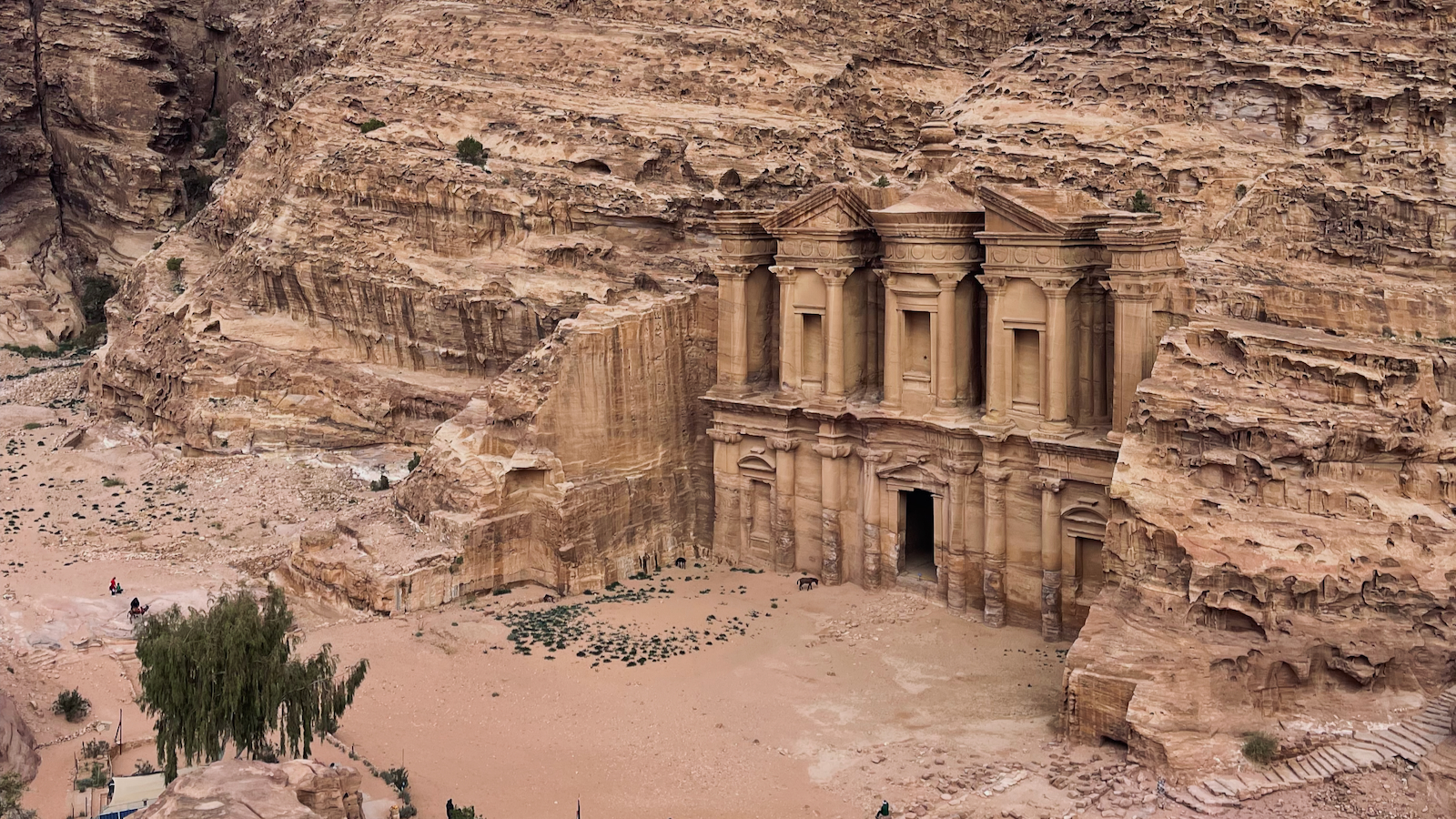
The Monastery is bigger than the Treasury. Let that sink in.
Getting there means climbing 800 stone steps up a winding mountain path. My calves were screaming halfway up, but I kept going. When I finally reached the top and saw it—this enormous, silent monument sitting alone in the hills—I just stood there. There’s a small cafe at the top where you can catch your breath and drink overpriced tea with a view. Worth every step.
[PRO TIP]: Start this hike by mid-morning. The climb takes 45 minutes to an hour, and you’ll want time to rest and explore at the top before heading back down.
The Royal Tombs: A Parade of Ancient Power
These tombs line the cliffs like a royal gallery, each one carved with a different vibe. I walked along the base, ducking into chambers and staring up at facades that have stood for over 2,000 years.
- Urn Tomb: The most dramatic—huge and imposing.
- Silk Tomb: Caught me off guard with its swirling colors, like someone painted the stone with watercolors.
- Palace Tomb: Looks like it should have columns, but it’s all just carved rock.
You can explore most of them up close. It’s quiet here, away from the Treasury crowds.
The High Place of Sacrifice: Views Worth the Sweat
This is where the Nabataeans came to perform rituals, and now it’s where hikers come for the view. The climb is steep—lots of uneven stone steps—but when you reach the top, you see all of Petra spread out below you.
I went in the late afternoon when the light was soft and golden. The wind was strong up there, and I could see the entire valley, tombs dotting the cliffs like ancient sentinels. It felt sacred. And earned.
The Theatre: Rome Leaves Its Mark
Carved into the hillside, this Roman-style theatre once held 3,000 people. I sat on one of the stone seats and tried to imagine what it was like—performers on stage, the crowd roaring, the acoustics bouncing off the rock.
It’s not the showstopper of Petra, but it’s a cool reminder of how many empires passed through here. The Nabataeans built this city, but the Romans left their fingerprints everywhere.