
The Ancient Stuff That Actually Matters
The Citadel
I climbed up to the Citadel on my second day. The hill is steep-really steep-but worth it.
Up top, you’ll find ruins from three different empires. The Temple of Hercules is just massive columns now, but standing next to them, you get a real sense of scale. The Umayyad Palace is mostly foundations and carvings, but I spent a good hour just wandering around, trying to imagine what it looked like when caliphs actually lived here.
The Jordan Archaeological Museum is small but well-curated. I saw some of the Dead Sea Scrolls here, which I wasn’t expecting. The view over Amman is what everyone talks about, and yeah, it’s good. I went back at sunset on my last day. The light turns the white buildings golden, and the call to prayer echoes across the city. It’s one of those moments that sounds cliché but actually delivers.
[PHOTO TIP]: Get there an hour before sunset. The late afternoon light is softer, and you’ll have time to find a good spot before the crowds arrive.
Roman Theatre
This thing is 2,000 years old and still looks ready to host a show. I sat in the upper tiers for a while, just watching people. There were families taking photos, a couple of tour groups, and some local kids kicking a ball around near the stage.
The two small museums on either side are easy to miss, but they’re worth a quick look. One has traditional costumes, the other has some mosaics and old pottery.
- Tip: I went during the day when the heat was brutal. If you can catch it lit up at night-maybe during a concert or event-do it.
Umayyad Palace
This is part of the Citadel complex, so you’ll see it when you’re up there. Not much is left-mostly carved stone and some archways-but the detail in the remaining pieces is incredible. I liked trying to piece together what the palace might have looked like.
Temple of Hercules
Again, part of the Citadel. Just those enormous columns and a hand (yes, a giant stone hand from a Hercules statue). It’s impressive in a quiet way. No flashy reconstruction, just the bones of something that used to be grand.
Where the City Actually Lives
Al Balad (Downtown)
This is the real Amman. Narrow streets, spice shops, fabric stalls, and more people than seems physically possible in that amount of space.
I got completely turned around here at least five times. No regrets. I found the best falafel sandwich I’ve ever had from a guy with a cart near King Faisal Street. He didn’t speak English, I don’t speak Arabic, but we figured it out.
The gold souq is intense-so much jewelry in one place. I didn’t buy anything (not my thing), but watching people bargain was entertaining. Street food here is cheap and good. Fresh pomegranate juice, shawarma, kunafa dripping with syrup. I ate my way through downtown and have zero shame about it.
[PRO TIP]: Go in the late afternoon. It’s cooler, the light is better for photos, and the streets are at their most alive.
Rainbow Street
Rainbow Street feels like a different city. Trendy cafes, art galleries, boutique shops. It’s where young Ammanis hang out, and where I found some of the best coffee in the city.
I spent a few evenings here, just sitting at a cafe and people-watching. The street has this relaxed energy that downtown doesn’t-less chaotic, more laid-back. The restaurants here are good but pricier than Al Balad. I had excellent hummus at Sufra, and the atmosphere was nice-traditional decor without feeling touristy.
Jabal Al Weibdeh
This neighborhood is artsy without trying too hard. I wandered through on a Friday morning and found a few galleries open, some cool street murals, and quiet cafes with outdoor seating.
The Darat al Funun art gallery is worth a stop. It’s free, the grounds are peaceful, and the exhibits change regularly. I saw some interesting contemporary Middle Eastern art there. The vibe here is residential and creative. Not a ton of tourists, which I appreciated.
Hammam Experience
I’ll admit, I was nervous about this. Stripping down and being scrubbed by a stranger isn’t exactly my comfort zone. But I did it, and it was… surprisingly great? The steam room, the marble slabs, the full-body scrub that removes more dead skin than seems possible. I felt like a completely different person afterward.
- Advice: If you’re going to do it, just commit. It’s awkward for about five minutes, then you stop caring.
Museums and Art
The Jordan Museum
This is the big one. Modern building, excellent exhibits, and the best overview of Jordan’s history you’ll get in one place. I spent about two hours here. The Dead Sea Scrolls are the headline attraction, but I was equally fascinated by the Neolithic statues from Ain Ghazal-some of the oldest human-shaped sculptures ever found.
- Bonus: Good air conditioning, which is a bonus in summer.
Royal Automobile Museum
I’m not even that into cars, but this was fun. King Hussein’s collection is impressive-everything from classic Porsches to custom-built parade vehicles. It’s out of the city center, so plan accordingly. I took an Uber.
Street Art
I love that Amman has a growing street art scene. Jabal Al Weibdeh has some great murals, and I found a few along Rainbow Street too. Nothing is officially marked, so it’s more about keeping your eyes open as you walk.
Tiraz Centre
Small museum focused on traditional Palestinian and Jordanian textiles and clothing. The embroidery work is stunning-intricate patterns that took months to complete. Not a long visit, maybe 45 minutes, but worthwhile if you’re interested in textiles or cultural history.
Religious Sites
King Abdullah I Mosque (Blue Mosque)
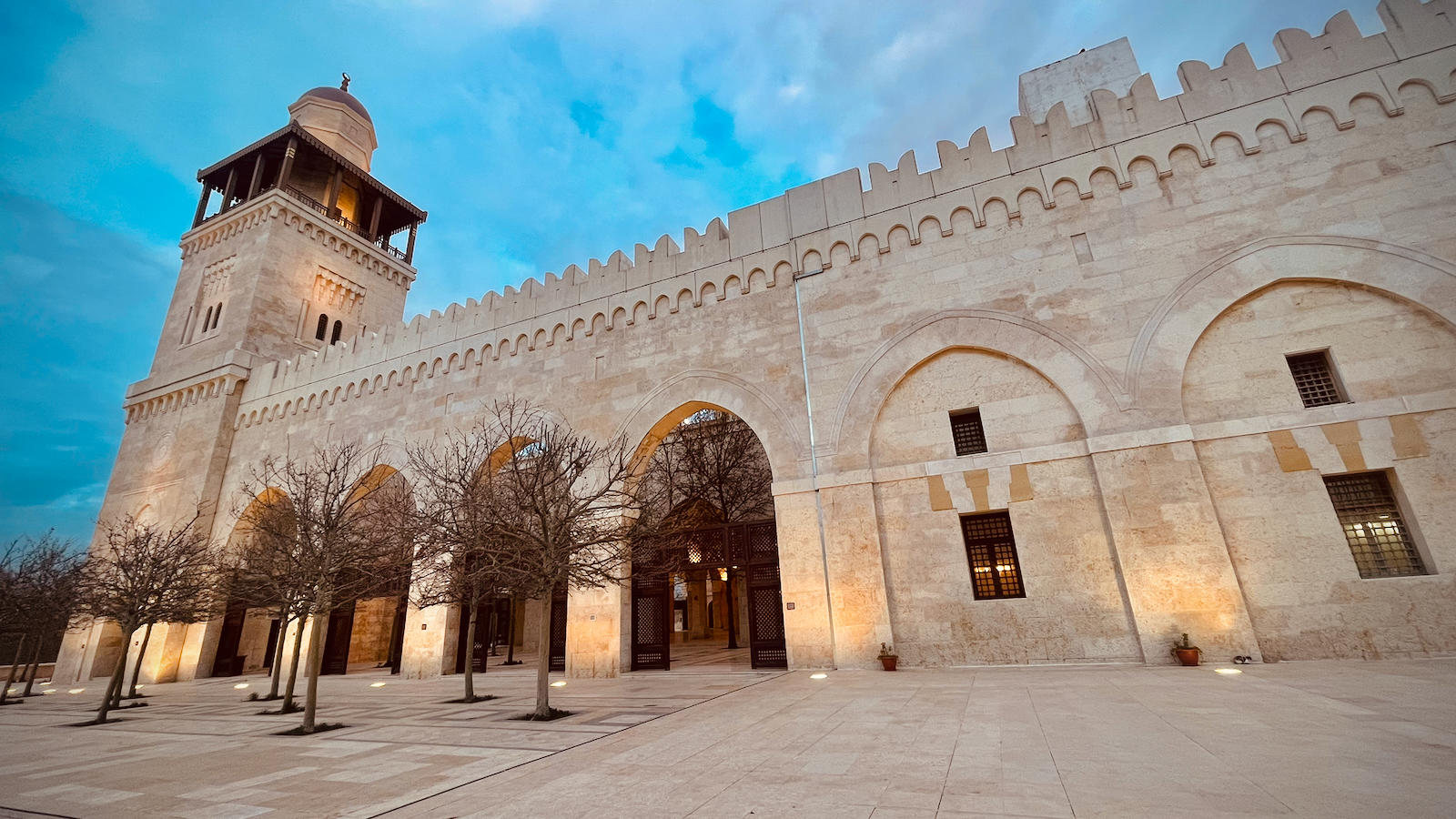
Marvel at the stunning blue dome and intricate tilework of the King Abdullah I Mosque, also known as the Blue Mosque. This beautiful mosque is one of Amman’s most iconic landmarks. Non-Muslim visitors are welcome to visit outside of prayer times, but remember to dress respectfully (shoulders and knees covered).
Coptic Orthodox Church
For a different religious experience, consider visiting the Coptic Orthodox Church in Amman. This church showcases the presence of the Christian community in Amman and provides an opportunity to learn about Coptic traditions.
The Food (Obviously)
Jordanian Dishes You Need to Try
- Mansaf: The national dish—lamb cooked in fermented yogurt, served over rice. It’s rich, tangy, and definitely an acquired taste.
- Mezze: Small plates of hummus, baba ghanoush, tabbouleh, labneh, olives. Order a bunch and share.
- Knafeh: Dessert—shredded pastry soaked in sugar syrup, layered with cheese. Absurdly sweet and worth it.
- Falafel: Crispy outside, fluffy inside, perfect in pita with tahini and pickles.
Cooking Class
I took a class at Beit Sitti, a cooking school run by three sisters. We made mezze from scratch—hummus, fattoush, stuffed grape leaves. It was hands-on, fun, and I actually learned techniques I’ve used since.
Street Food
The best meals I had in Amman cost less than three dinars. Falafel sandwiches, fresh juice (try the mango), shawarma wraps, and kunafa from roadside stalls. I followed the “busy = good” rule and never got sick.
Traditional Coffeehouse (Ahwa)
I went to one near Al Balad on a Thursday evening. Arabic coffee is strong and served in tiny cups. I also tried shisha for the first time (apple flavor—don’t judge). It’s a very male-dominated space. If you’re a woman traveling solo, you might feel more comfortable going with someone or to a more modern cafe.
Day Trips I Actually Took
Jerash
Roman ruins, but some of the best-preserved I’ve seen. The colonnaded streets, the theaters, the temples—it’s all still standing.
- Cost: I hired a driver for the day (about 50 JOD round trip). Totally worth it. Jerash is less than an hour from Amman
.
Dead Sea
You’ve seen the photos. Yes, you really do float. Yes, it feels as weird as it looks. I went to Amman Beach, a public beach that’s way cheaper than the resort options. It’s more crowded and less fancy, but I didn’t care.
- Warning: The water stings if you have any cuts. Learn from my mistake—shave your legs the day after, not before
Madaba & Mount Nebo
- Madaba: Incredible Byzantine mosaics, especially the map of Jerusalem on the floor of St. George’s Church
- Mount Nebo: Where Moses supposedly saw the Promised Land. The view over the Jordan Valley is expansive.
- Logistics: I did both in one morning with a driver. Easy half-day trip
Practical Stuff
- When to Go: I was there in April —perfect weather. Spring (March-May) and Fall (September-November) are your best bets. Summer (June-August) is brutal; I talked to people who barely left AC.
- Getting Around: Taxis are cheap. Uber works well. I used both constantly. Public buses exist, but I never figured them out.
- What to Wear: Jordan is conservative. I wore pants or long skirts, and kept my shoulders covered. In Al Balad and religious sites, this matters more. On Rainbow Street, you have more flexibility.
- Money: Jordanian Dinars (JOD) . ATMs are everywhere. Bargaining is expected in souqs.
- Safety: I felt safe the entire time. Amman is one of the safer cities in the region. Standard precautions apply.
My Honest Take
If I had one day in Amman, I’d spend the morning at the Citadel, the afternoon getting lost in Al Balad, and the evening on Rainbow Street.
But really, the best part of Amman is that it doesn’t try to be anything other than itself. It’s not polished. It’s not trying to compete with Dubai or Istanbul. It’s just a city where 2,000 years of history and modern Middle Eastern life coexist, and where you can eat incredible food on a street corner for two bucks. I’d go back.