
The Jerash Archaeological Site
The site is massive. I spent an entire morning here and still felt like I could’ve stayed longer. Here are the spots you can’t skip:
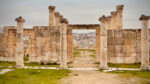
- Hadrian’s Arch: This is where you enter, and the scale of it hits you immediately. It was built to honor Emperor Hadrian’s visit in 129 AD, and standing under it made me realize how much effort went into impressing one guy.
- The Oval Plaza: Exactly what it sounds like—a huge oval-shaped forum surrounded by columns. I sat on the steps for a while, watching the light shift across the stones, trying to imagine the noise and chaos of a Roman marketplace.
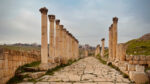
- Colonnaded Street (Cardo): Walking down this street felt surreal. It stretches long and straight, flanked by rows of columns. You can still see the chariot grooves carved into the stone.
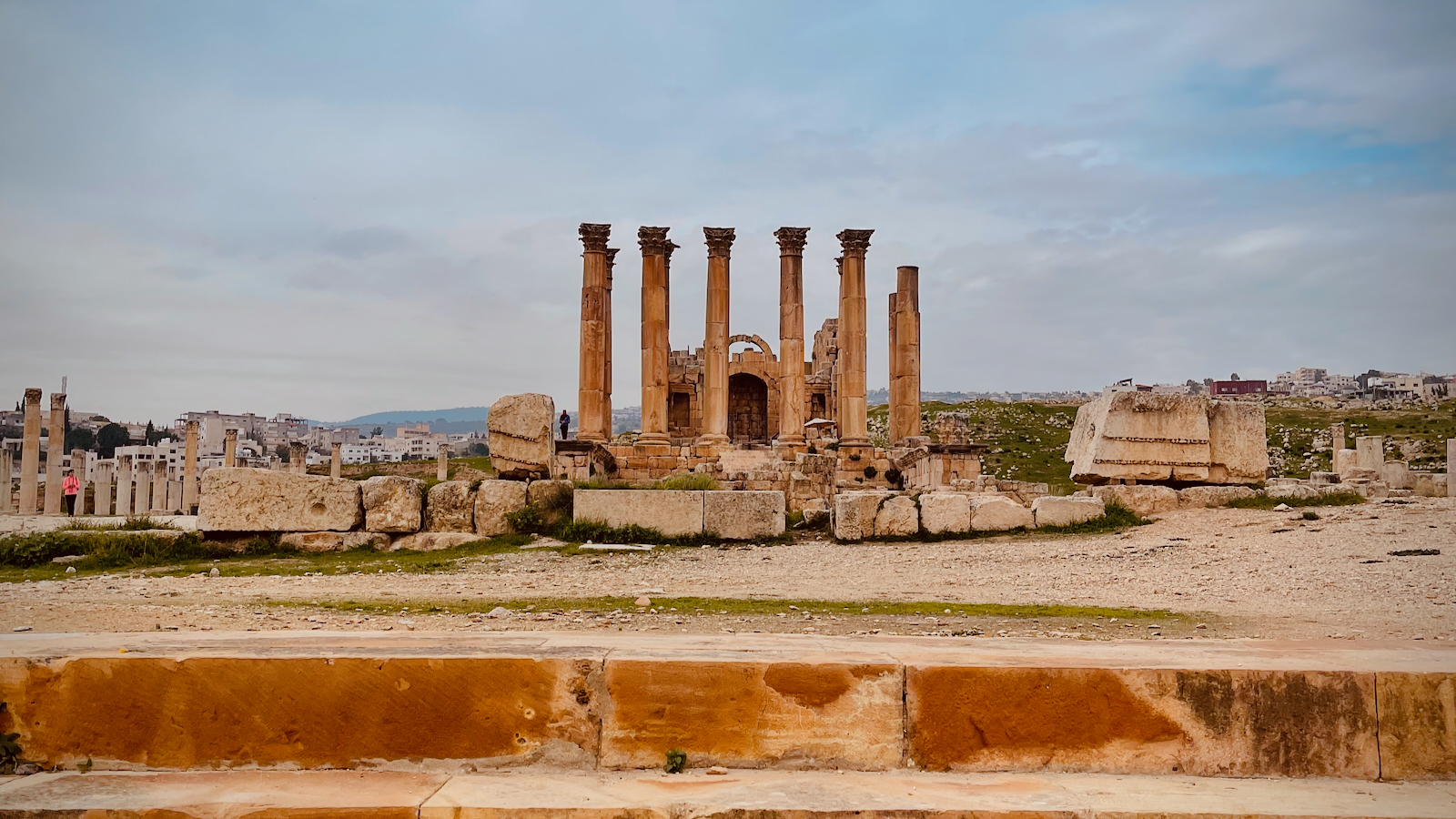
- Temple of Artemis & Zeus: I climbed up to the Temple of Artemis for the view. The hike is short but steep, and the reward is sweeping views over the ruins and the hills beyond. The Temple of Zeus is equally impressive, and the stonework up close is intricate—worth the extra effort.
- South Theatre: Shockingly well-preserved. I clapped once to test the acoustics, and the sound bounced around like the place was still in use. A local guide told me they still hold performances here during the summer festival.
[PHOTO TIP]: Early morning light (around 8–9 AM) makes the honey-colored stones glow. Afternoons get harsh and flat.
What Else to Do (Beyond the Stones)
The ruins are the main event, but I’m glad I carved out time for the rest of Jerash.
- Jerash Festival: If you’re visiting in July or August, check if this is happening. It’s a massive cultural event with music, dance, and theatre performances—some of them right inside the ancient theatre.
- Modern Jerash: I spent an afternoon wandering the modern town, which is scrappy and real. There’s a small souk where I bought spices and watched a guy hand-roll falafel. No one was trying to upsell me on “handcrafted ancient treasures.”
- The Food: The food here is excellent. I had Mansaf at a family-run spot near the ruins—lamb cooked in jameed (fermented yogurt) and served over rice. It’s rich, tangy, and you eat it with your hands. Messy, but worth it.
Side Trip: Ajloun Castle
If you’ve got a half-day to spare, Ajloun Castle is a 30-minute drive north. It’s a 12th-century fortress built by one of Saladin’s generals, perched on a hill with views over green valleys.
It’s smaller than Jerash, but the setting is beautiful. I went on a weekday and had the place nearly empty—just me, the wind, and the view.
My Advice: Slow Down
I almost made the mistake of treating Jerash like a checklist. Walk in, see the columns, take the photos, leave. But the best moments happened when I stopped moving. Sitting on a stone bench in the Oval Plaza. Listening to the wind through the temple ruins. Watching an old man sell tea from a cart near the entrance.
Give yourself time. Wander. Sit. Let the place settle in. And don’t skip the town. The ruins are stunning, but the food, the people, the little markets—that’s what I actually remember most.