
Jebel Umm Ad Dami (The Highest Point in Jordan)
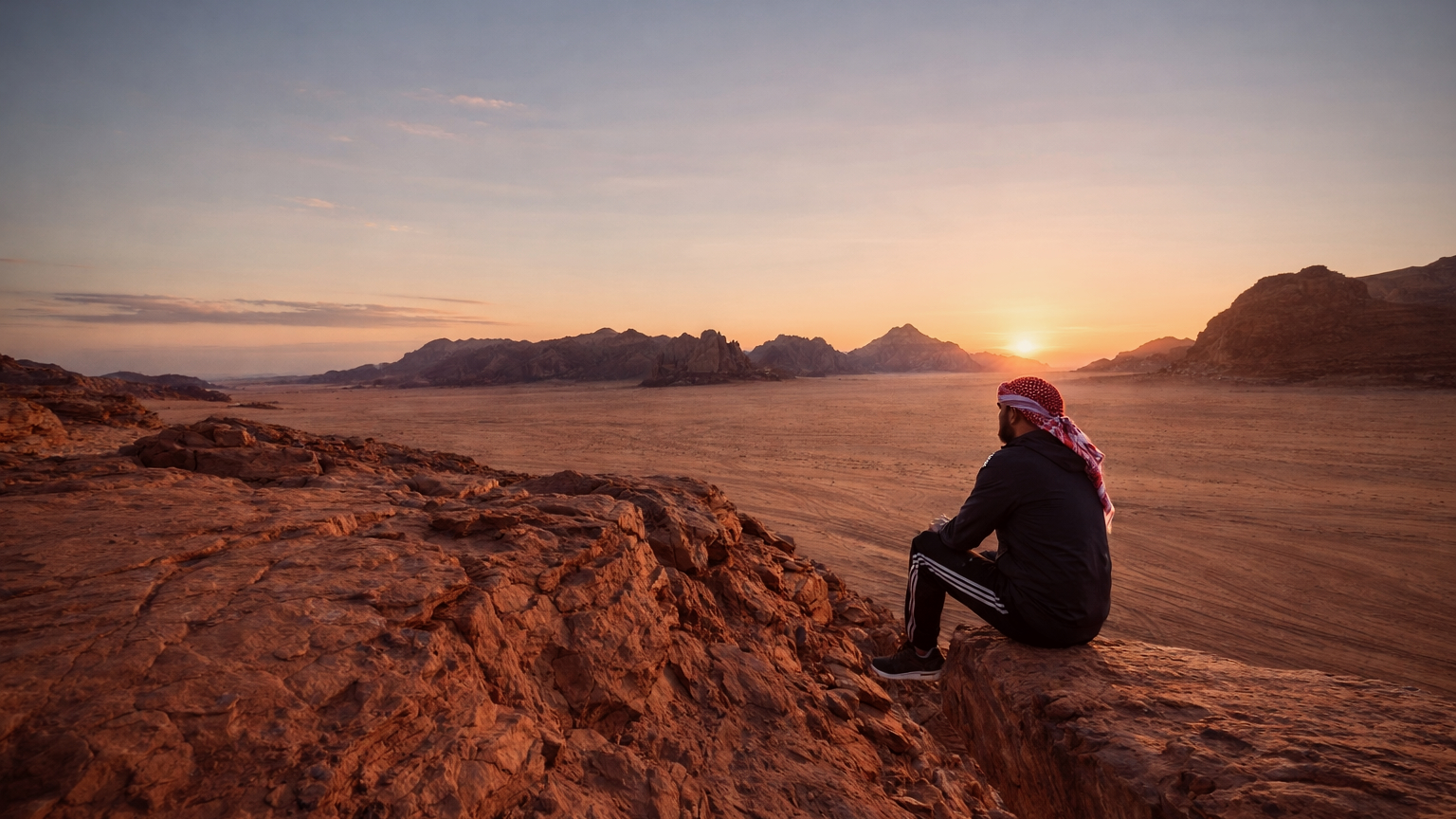
I’ll be honest: the climb up here isn’t easy. But standing at Jordan’s highest peak, looking out over layers of mountains fading into the distance? Worth every step.
The view is massive. Sand dunes roll out below, and the horizon seems to go on forever.
[PHOTO TIP]: Come for sunrise. The desert wakes up in oranges and pinks, and a telephoto lens will compress those mountain layers beautifully. I also shot a time-lapse here—it’s one of my favorite videos from the trip.
Mushroom Rock
This thing looks exactly like it sounds—a giant mushroom carved by wind, sitting in the middle of nowhere. It’s almost comical how perfect the shape is. I had someone stand next to it for scale, and the photos turned out way better than I expected.
[PHOTO TIP]: Shoot from a low angle to make it look even more dramatic. Have your subject lean against it or pretend to hold it up—cheesy, maybe, but it works.
Khazali Canyon
Walking into this narrow canyon felt like stepping back in time. The walls are covered in ancient carvings—Nabataean and Thamudic inscriptions that are thousands of years old. The light inside is soft and even, which made photographing the details surprisingly easy.
[PHOTO TIP]: If people are walking through, try a long exposure to blur their movement—it adds an almost ghostly feel. Afternoon light is your friend here; harsh midday sun kills the mood.
Umm Fruth Rock Bridge
This is the postcard shot. A natural arch framing the desert behind it—it’s been photographed a million times, but it never gets old. I got there early to avoid the crowds, and I’m glad I did. The clean shot was worth waking up for.
[PHOTO TIP]: Stand under the bridge for a silhouette shot. Or, if you’re feeling adventurous (and careful), climb on top for a perspective most people skip.
The "Man-made" Bridge
Not natural, but still stunning. This old bridge cuts across the landscape and frames the desert in a way that feels cinematic. I loved how it added a human element to all that emptiness.
[PHOTO TIP]: Use a wide-angle lens and shoot during blue hour—that soft twilight glow right after sunset. The bridge leading into the distance creates beautiful depth.
Stargazing
I’ve seen dark skies before, but Wadi Rum’s night sky stopped me in my tracks. The Milky Way was so bright I could see it with my naked eye. If you’ve never tried astrophotography, this is the place to start.
[PHOTO TIP]: Tripod + 15-30 second exposure. Include a tent or rock formation in the foreground to give the shot context. And download a stargazing app—it’ll help you find constellations and write better captions.
Bedouin Camps at Night
The camps at night are pure atmosphere. Lanterns flicker, fires glow, and the whole scene feels warm against the cold desert darkness. I asked permission before taking close-ups of people, and everyone was incredibly welcoming.
[PHOTO TIP]: Shoot from slightly above the camp for a wider view. Slow shutter speed to capture the warm light and movement around the fire.
Camel Caravans
Camels walking across the dunes in a line—it’s the classic Wadi Rum shot, and it’s classic for a reason. I caught one at golden hour, and the light made the whole scene look timeless.
[PHOTO TIP]: Telephoto lens to compress the scene. Shoot low to make the camels look taller. Try to catch them in a line for that sense of rhythm and movement.
My Take: Stay for Sunset and the Stars
If you’re serious about getting good photos here, spend the night. Watching the sun set over the dunes, then lying back to see the Milky Way stretch across the sky—those are the moments that make the trip.
The shots you’ll get are incredible, sure. But honestly? The experience itself is the thing you won’t forget.