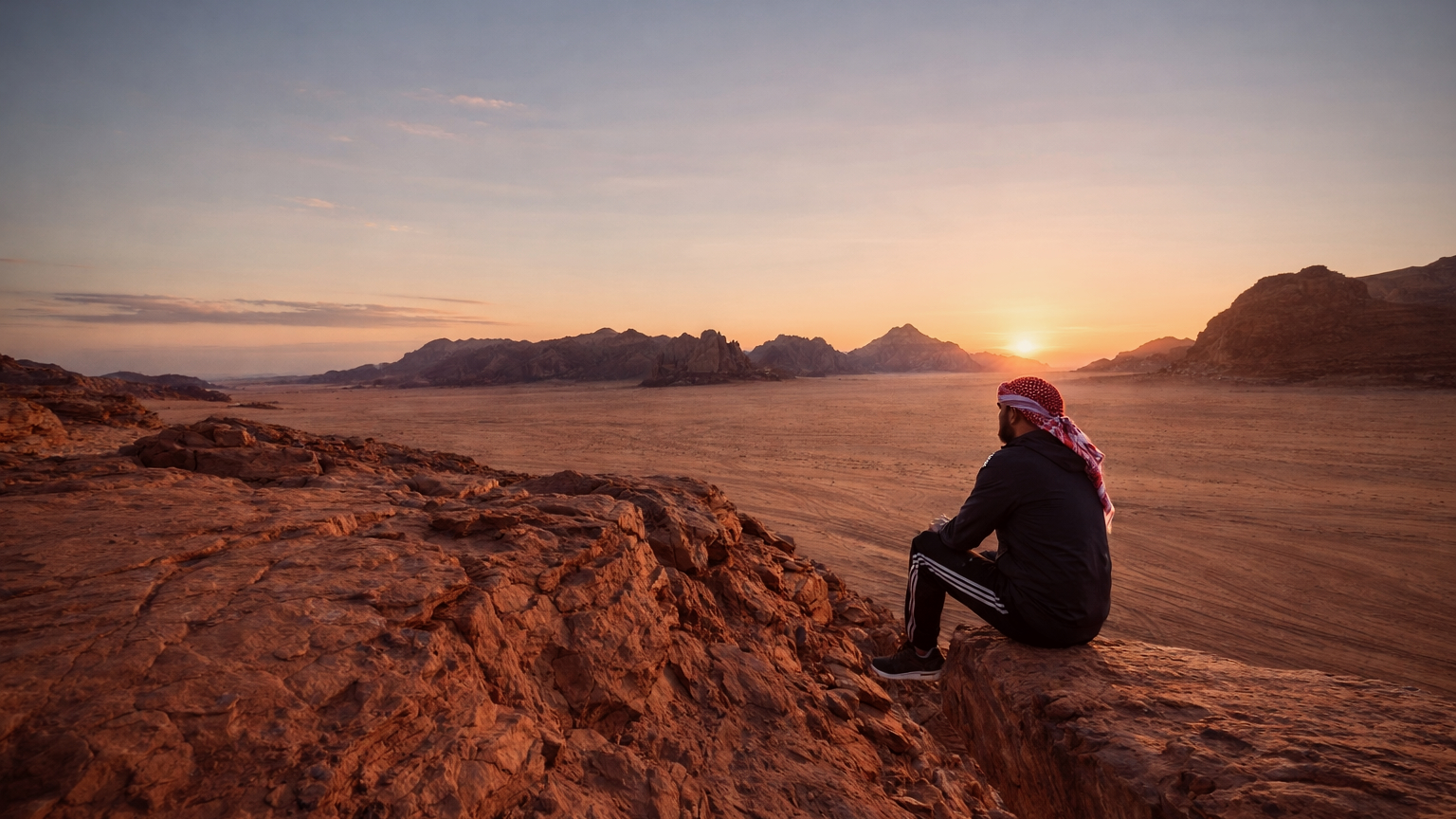
I was mid-sentence when the sunset stopped me. The desert had been red all day, and then suddenly it wasn’t — it was orange, then purple, then a blue so dark it looked painted. That’s Wadi Rum. The things to do here aren’t really activities. They’re just different ways to be inside that landscape.
Sleep in a Bedouin Camp: One Night Is the Minimum
- Best time: Year-round; March–May and September–November for comfortable temperatures
- Cost: 40–150+ JOD per night depending on camp style
- Crowd window: Camps feel quieter on weeknights; weekends draw more visitors from Aqaba and Amman
Dinner is cooked underground in a zarb — a traditional Bedouin oven buried in the sand. They lift the whole thing out at sunset, and the smell hits you before The Food does: slow-roasted lamb and vegetables that have been sitting in their own steam for hours. After eating, someone usually brings out an oud. You end up sitting around the fire with tea that’s far too sweet, listening to stories you half-understand but fully enjoy.
Tip
- Camps range from basic tents with shared bathrooms to full glamping setups with private facilities. The tent quality matters less than the camp’s location — deeper inside the protected area means darker skies and more silence.
- Book directly with the camp where possible. Third-party platforms sometimes book you into a different location than advertised.
- Bring earplugs if you’re a light sleeper — wind against canvas at 3am is louder than you’d expect
Jeep Safari: The Efficient Way to Cover Ground
- Best time: Start at 7am to hit main sites before midday heat
- Cost: Half-day from 30–50 JOD; full-day from 50–70+ JOD per person
- Crowd window: Lawrence’s Spring and Khazali Canyon get busy 10am–2pm
The jeep bounces hard across the sand and your driver will take corners faster than seems reasonable. Hold on to something. The route usually covers Lawrence’s Spring, Khazali Canyon — where Nabataean inscriptions cover narrow walls of cool shade — Little Bridge, and Um Frouth Rock Bridge. The inscriptions at Khazali are worth slowing down for. They’re carved into the rock face at eye level, which makes them feel personal rather than monumental.
Tip
- The sun reflects off the sand — bring sunscreen and reapply more often than you think you need to
- Full-day tours are worth it. The half-day version rushes the sites that reward patience.
- Confirm exactly which sites are included before you pay. Routes vary between operators.
Camel Trekking: The Slower Version of Everything
- Best time: Late afternoon — the light changes dramatically in the last two hours before sunset
- Cost: Two-hour ride from 20–30 JOD per person
- Crowd window: Most treks run at sunset; morning rides are quieter
A two-hour sunset ride moves through the desert at a pace that lets you notice things the jeep misses: the way the sand shifts color from rust to pink as the light drops, the small thorn plants that somehow survive in almost no soil, the total silence between your guide’s sentences. Your legs will feel odd afterward — the saddle position is nothing like a horse. That’s normal.
Tip
- Wear long trousers. The saddle rubs bare legs after the first thirty minutes.
- Ask your camp to arrange this directly — it’s usually cheaper than booking through the visitor center
Sandboarding: Commit to the Fall
- Best time: Morning, before sand heats up
- Cost: Often included in full-day jeep tours; standalone from 10–15 JOD
- Best dunes: Near Jebel Umm Ulaydiyya — bigger drop, better run
The hike up the dune takes longer than expected and the slide down takes about four seconds. You will eat sand. The trick is committing fully — half-hearted attempts end sideways. The bigger dunes near Jebel Umm Ulaydiyya give you enough vertical to actually build speed before the flat catches you.
Tip
- Boards are usually provided by the jeep tour or your camp — ask before paying separately
- Wear closed shoes. Sand inside sandals on a steep dune is its own special misery.
Stargazing: No Program Required
- Best time: 10pm–2am, away from new moon dates
- Cost: Free — just walk away from camp
- Crowd window: Not applicable — you’re alone in the dark by definition
Wadi Rum has almost zero light pollution. The Milky Way is visible to the naked eye on clear nights — not faintly, but clearly, the way it looks in photos that you assume are long-exposure composites. Lie flat in the sand, which holds heat from the day longer than you’d think, and give your eyes ten minutes to adjust. Three shooting stars in under an hour is not unusual. While the stars are the best way to see the desert at night, a hot air balloon ride is the ultimate way to see it at dawn.
Tip
- Most camps offer organized Stargazing programs. They’re fine, but you don’t need them. Just walk fifty meters from the fire and look up.
- Check the lunar calendar before your trip — a full moon washes out the fainter stars
Hiking and Scrambling: Working for the Views
- Best time: Early morning — cooler temperatures and better light for photography
- Cost: Guide required for Jebel Umm Ad Dami from 40–60 JOD; shorter hikes arrangeable from camp
- Crowd window: Most hikers head out 7–9am; Burrah Canyon stays cooler throughout the day
Jebel Al Hash is a moderate scramble with views that open up suddenly at the top — you climb through rock and then the whole floor of the valley appears below you at once. Burrah Canyon runs cooler than the open desert; the narrow walls keep the sun out for most of the day. Jebel Umm Ad Dami, Jordan’s highest peak, requires a guide and an early start, but the sunrise from the top is the kind of thing people come back specifically to do.
Tip
- Proper shoes matter here — trainers work for the canyon, but the mountain scrambles need ankle support
- Carry at least two liters of water per person. More in summer.
If I Had One Night
One night minimum in a camp inside the protected area. Make sure you’re outside when the sun goes down, and then stay outside. The desert at dusk and the desert at 1am are two completely different places, and both of them are worth being awake for.