Jerash
Where to Stay in Jerash: Best Areas & Hotels for Ruin Access
Most people ask where to stay in Jerash and get the same answer: stay in Amman, take the bus, see…
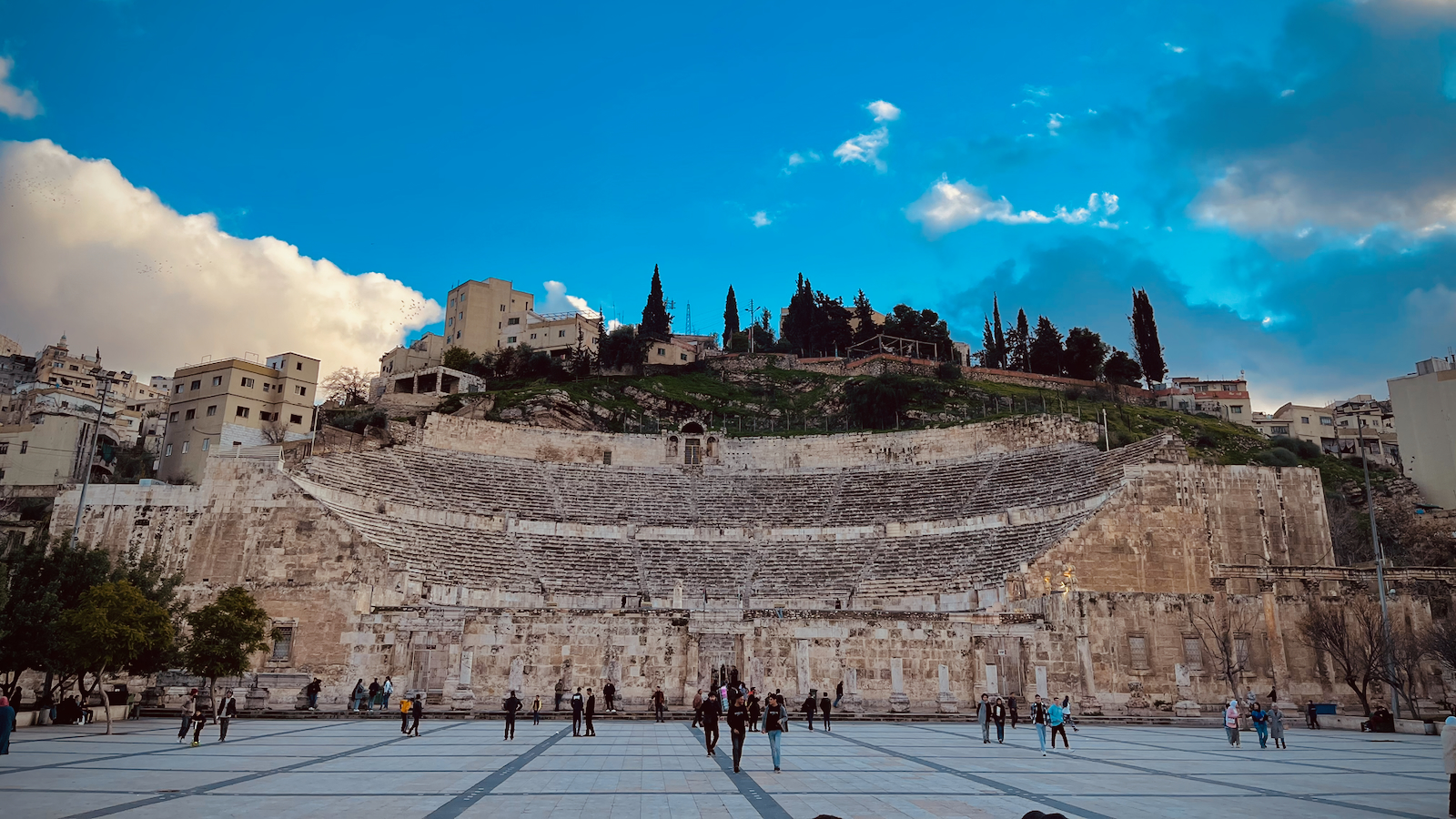
The first thing I noticed landing in Amman was the light. Late afternoon, the city built on hills, limestone catching the sun at a low angle. Everything looked the same colour — pale gold — and it took me a moment to figure out why: almost every building in the city is made from the same local stone, by law. That detail is somehow more interesting than any landmark.
Jordan is compact but dense with things worth seeing. I came for Petra and left thinking more about Wadi Rum, the food, and the fact that I drank tea with a stranger on my first afternoon and he didn’t try to sell me anything. The best time to visit is March to May or September to November, when daytime temperatures sit between 15–25°C and the desert is actually walkable. It suits independent travelers who want depth over distance, and solo travelers who want to feel genuinely welcome somewhere.
Most people ask where to stay in Jerash and get the same answer: stay in Amman, take the bus, see…

I got to the south gate at 7:30am and the ticket seller was still finishing his tea. That set the…
Every corner of Jordan pulls in a different direction. These are the places worth building your trip around.


The light in Wadi Rum hits the sandstone at an angle I haven’t seen replicated anywhere else. At golden hour…

I was mid-sentence when the sunset stopped me. The desert had been red all day, and then suddenly it wasn’t…
The best frames in Jordan — from iconic skylines to the spots most travellers walk straight past.
View Photo StoriesA practical route through Jordan — paced for real travellers, not highlight reels.
The light in Wadi Rum hits the sandstone at an angle I haven’t seen replicated anywhere else. At golden hour…
I was mid-sentence when the sunset stopped me. The desert had been red all day, and then suddenly it wasn’t…

The first thing I noticed arriving at Wadi Rum was the silence. Not quiet — actual silence, the kind that…
Jordan has a mostly semi-arid climate. Summer heat in the desert regularly pushes past 38°C, while highland areas like Amman and Petra stay 5–8°C cooler year-round.
The Jordanian Dinar (JOD) trades at roughly 0.71 to 1 USD, which makes it one of the stronger currencies in the region. Cards are accepted at hotels, larger restaurants, and tourist sites. Keep cash for markets, small towns, and any transaction under JD 5.
JETT buses connect Amman to Aqaba, Petra, and other major destinations reliably and cheaply. In Amman, Careem is the standard ride-hailing app. Renting a car makes a real difference for reaching Wadi Rum, Dana, and the places that don’t have bus service. Roads are well-maintained and driving is straightforward by regional standards.
Jordan is one of the safest countries in the Middle East for independent travel. The main thing to watch for is petty tourist-targeted scams around major sites, particularly unsolicited “guides” near Petra’s entrance who quote one price and add another later.
Jordanian food is heavy, generous, and built around lamb, rice, and flatbread. Mansaf — slow-cooked lamb over jameed-sauced rice — is the national dish and worth eating at least once from an actual restaurant rather than a tourist buffet.
Jordan is a predominantly Muslim country, and halal food is the default at every local restaurant. I never had to check, ask, or explain. In rural areas and smaller towns the choice narrows, but halal availability does not.

For daily travel inspiration and stunning photos, follow @travelbits.info
@travelbits.info