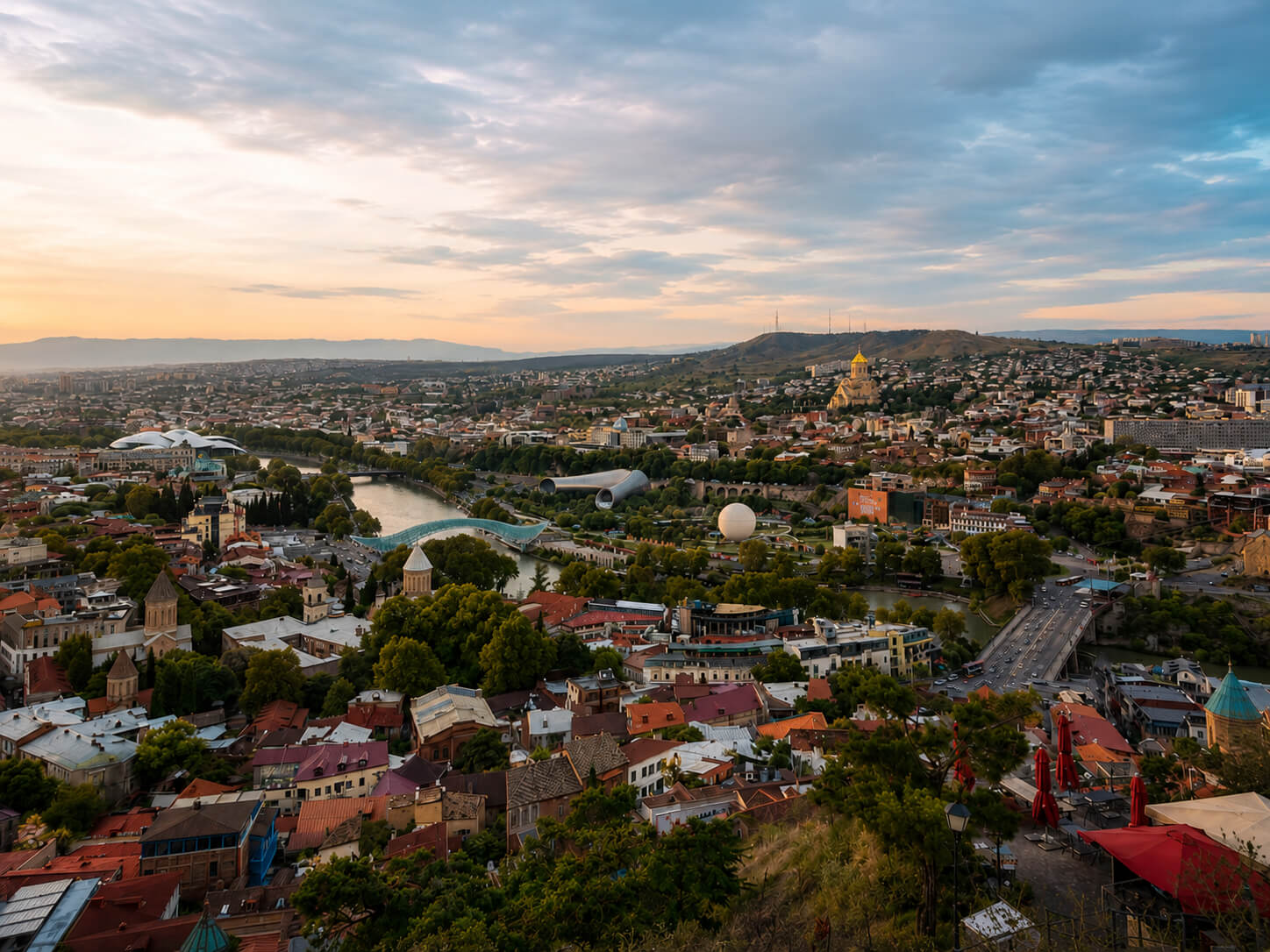

I took the cable car up to Narikala Fortress before the city had fully woken up. From the top, Tbilisi spreads out below in a way that makes sense of it — the old town tight and dense along the river, the newer parts spreading out beyond. Coming down on foot through the fortress walls and back into the old streets took about forty minutes and was the best forty minutes I spent in the city.
Tbilisi is not a city that performs for you. It is quiet, layered, and better the slower you go.
Narikala Fortress: Cable Car Up, Walk Down
- Best time: 10:00 AM (opening) for the cable car, or earlier on foot
- Cable car: Runs from Rike Park — 2.5 GEL one way
- Entry: The fortress walls are free to walk once you’re up
- Time needed: 1.5–2 hours including the walk down
The cable car takes about five minutes and the view opens up immediately. At the top, the fortress is partially ruined but substantial — thick stone walls, towers, a small church inside. The walk down winds through the old town streets back toward Abanotubani. It is steep in places and uneven underfoot, but worth it over taking the cable car both ways.
Tip
- Take the cable car up, walk down through the old town — the descent is the better experience
- The Mother of Georgia statue is right next to the fortress — visible from the cable car and worth a close look on foot
Sameba Cathedral: Bigger Than It Looks From Outside
- Entry: Free
- Best time: Weekday mornings — quieter, better light inside
- Location: Avlabari district — short Bolt ride from the old town
- Time needed: 30–45 minutes
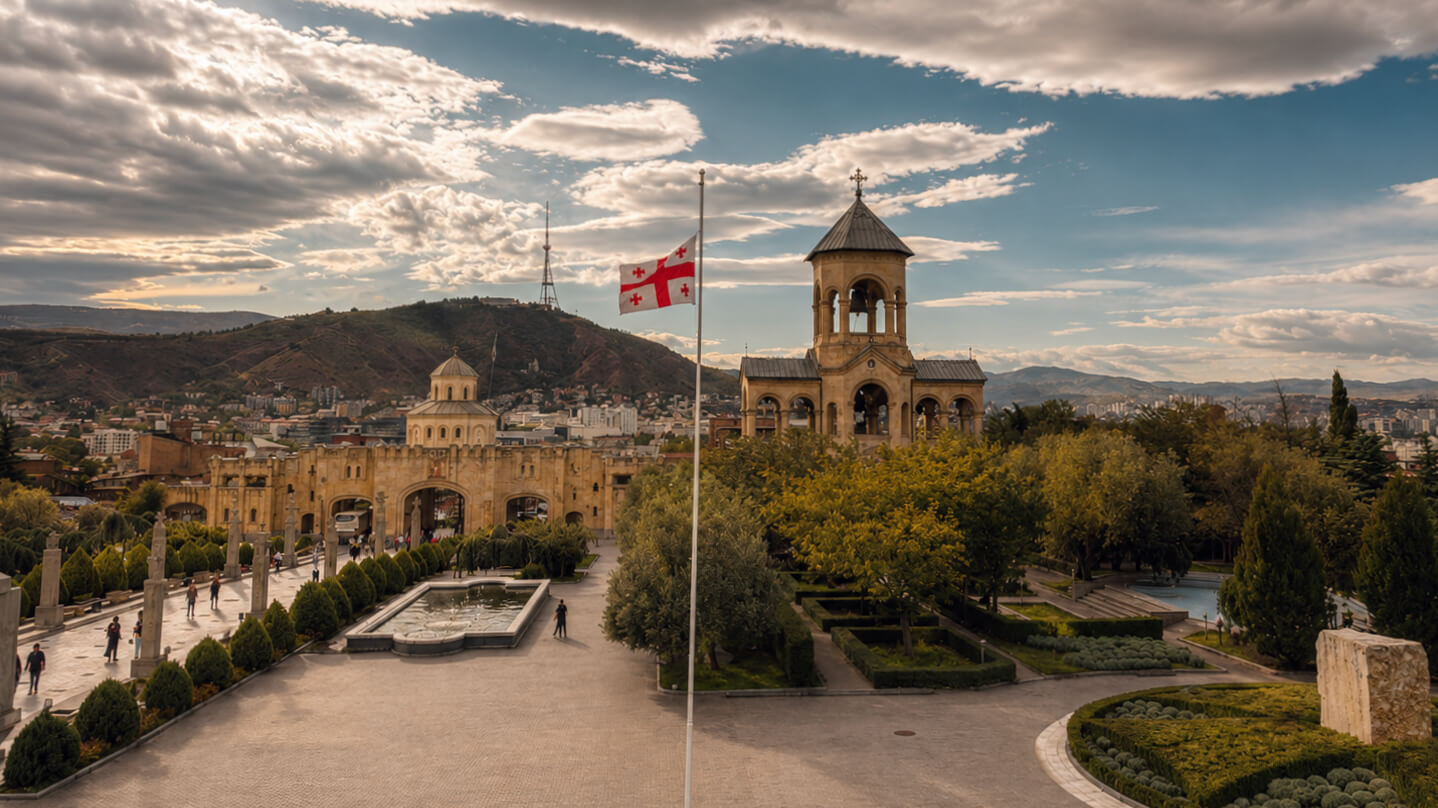
The Holy Trinity Cathedral of Tbilisi is one of the largest Orthodox cathedrals in the world and it feels it from the inside. The ceiling pulls your eyes up and keeps them there. Candles burn in rows along the walls, the smell of wax thick in the air. People were praying quietly in corners the whole time I was there. It is not a tourist attraction that happens to be a church. It is a church that tourists are allowed into.
Tip
- Modest dress required — cover shoulders and knees. Scarves available at the entrance.
- Photography is permitted in most areas but read the room — services happen throughout the day
Chronicle of Georgia: The Monument Outside the City
- Entry: Free
- Getting there: Bolt from the city centre — around 15–22 GEL each way
- Best time: Late afternoon — better light on the stone carvings
- Time needed: 30–45 minutes
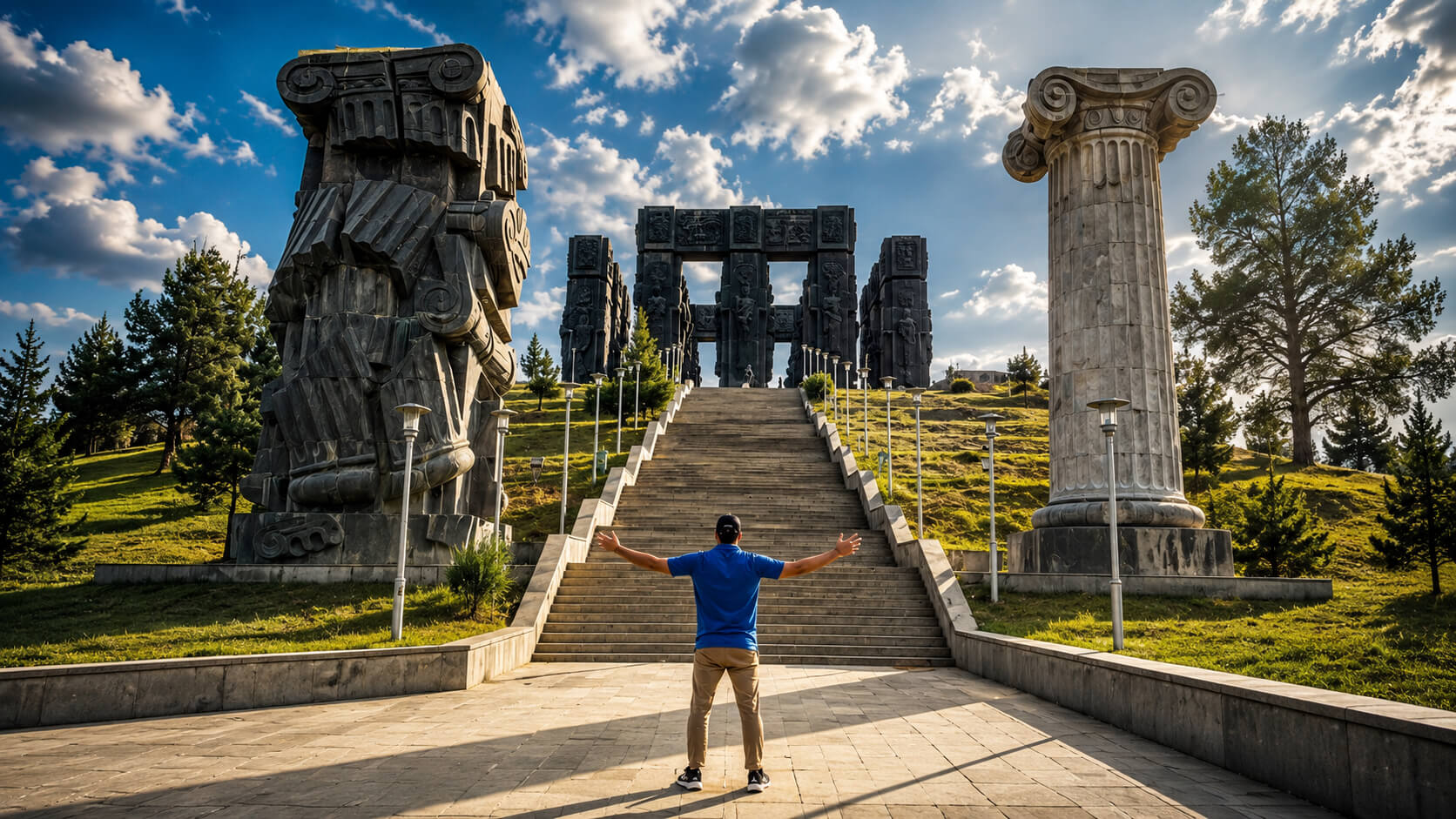
Sixteen massive stone columns rising out of a hilltop above the Tbilisi Reservoir. Each column is carved with figures from Georgian history and religion, stacked from base to top. Standing next to one of them resets your sense of scale. They are much taller and more detailed up close than any photograph suggests. Most tourists skip this because it requires a taxi. That is exactly why it is worth going.
Tip
- Combine with a drive along the reservoir — the view back toward the city from the hilltop is one of the best in the area
- No facilities on site — bring water, especially in summer and early autumn
Mtskheta Day Trip: Two Sites, Half a Day
- Distance from Tbilisi: 20km — about 30 minutes by car or taxi
- Getting there: Bolt or marshrutka from Didube station — 2 GEL by marshrutka
- Entry: Both sites free
- Time needed: 3–4 hours for both Jvari and Svetitskhoveli
Jvari Monastery sits on a ridge above the town and the view from up there, where two rivers meet below, is one of those things that earns its reputation. Svetitskhoveli Cathedral in the town below is older and more elaborate — carved stone exterior, painted interior, candlelit and cool inside even on a warm day. Mtskheta is small enough to cover both in a half day without rushing.
Tip
- Go to Jvari first — it gets crowded by midday with tour groups coming up from Tbilisi
- Modest dress required at both sites
- If you are driving between Tbilisi and another city, Mtskheta makes a natural stop — it sits right on the main highway north
Abanotubani: The Sulphur Bath District
- Location: Old town — walkable from Narikala
- Private bath cost: From 60–100+ GEL per hour depending on the bathhouse
- Best time: Afternoon — most bathhouses open from noon
The dome-shaped rooftops of the bathhouses are one of Tbilisi’s most recognizable sights. The smell of sulphur reaches you before you see them — warm and slightly mineral, not unpleasant. I walked through the district but did not go in. If you want the experience, Chreli-Abano is the most visited bathhouse and offers private rooms. It is not something you have to do, but it is something Tbilisi is genuinely known for.
Tip
- Book a private room rather than shared — more comfortable and better value for small groups
- Bring a swimsuit and a towel, or rent one on site for a small fee
Kvarts Coffee: The Portrait Cafe on Rustaveli
- Address: 26 Shota Rustaveli Avenue — underground, look for the sign
- Coffee price: Around 10 GEL for a double espresso
- Portrait: Free — drawn on your cup while you wait
- Wait time: 1–2 hours when busy. Up to 3 hours on weekends.
An artist sits in the corner and draws your face onto your coffee cup while you wait. That is the whole concept and it works completely. I waited close to two or three hours for mine. The trick is to order, leave your name, and go walk Rustaveli Avenue for an hour. Come back, collect your portrait, drink your coffee. The cup becomes the souvenir.
Tip
- Go on a weekday morning — weekend afternoons have the longest queues
- Ask for your portrait on a separate cup so you can keep it without drinking from it
- Leave a tip for the artist — the portrait is free but the work is not quick
Fabrika and the Old Town Streets
- Fabrika: 8 Egnate Ninoshvili Street — former Soviet sewing factory, now a creative complex
- Entry: Free to walk around
- Best time: Evening — cafes, bars, and food stalls come alive after 6pm
Fabrika is a converted factory with a large courtyard full of container cafes, a hostel, a record shop, and what feels like the entire young Tbilisi population on any given evening. The colourful stairways and tiled art passages nearby are worth finding on foot. None of it requires a plan. The old town rewards wandering more than any list I could write.
Bridge of Peace: Skip It
- Location: Connects Rike Park to the old town across the Mtkvari River
- Entry: Free
The Bridge of Peace is a glass and steel pedestrian bridge that gets photographed constantly. It is fine as a crossing. As a destination, it has nothing to offer. You stand on it, you look at the river, you take a photo that looks like every other photo of the bridge. Walk across it if you are heading to Rike Park anyway. Do not make a trip of it.
How I Would Do Tbilisi Again
Two full days is enough to cover the main sights without feeling rushed. Start both mornings early — Narikala before 9am on day one (walking up), Mtskheta on day two. Use the afternoons for the old town, Fabrika, and Kvarts Coffee. On the second evening, take a Bolt out to the Chronicle of Georgia before sunset. That sequence leaves nothing important out and keeps the pace right.