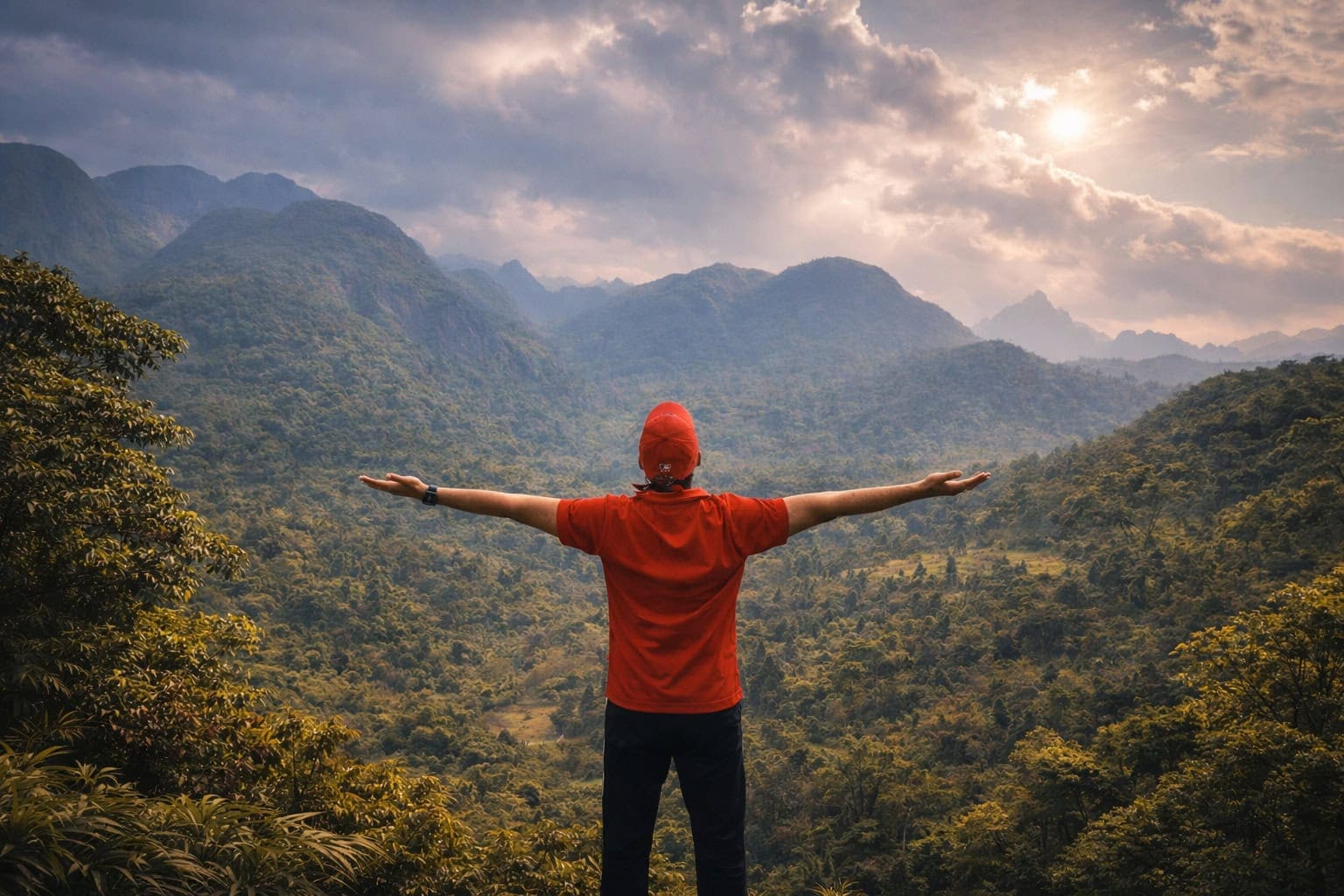
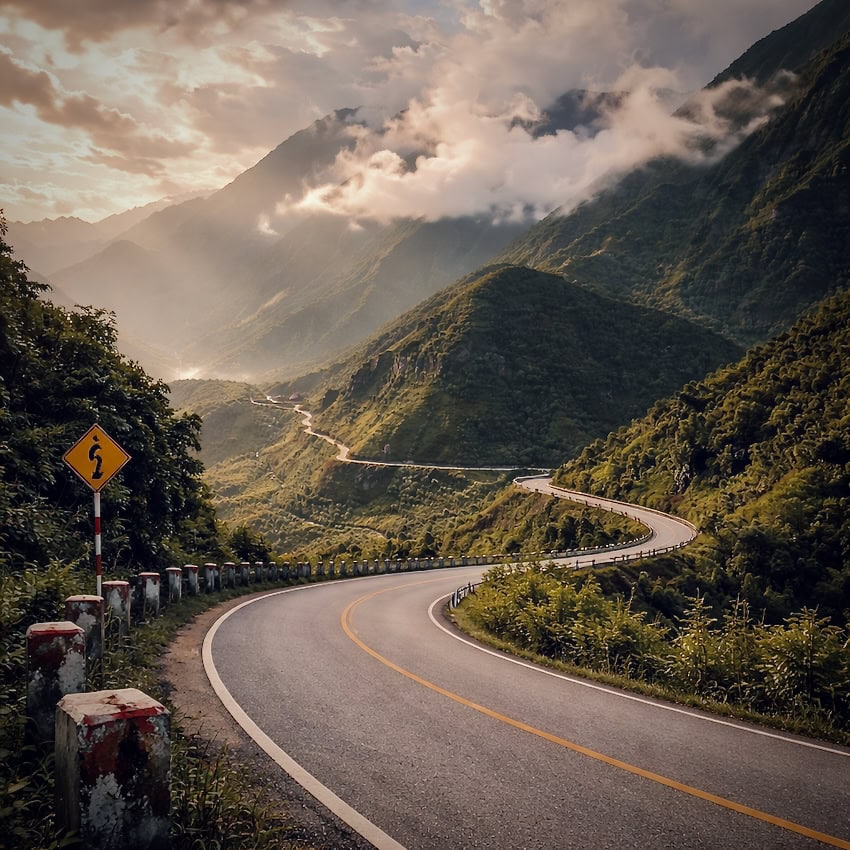
I pulled over on the O Quy Ho road with no plan to stop. The valley below had filled with cloud in the last twenty minutes and I just stood there, engine off, listening to nothing.
Cat Cat Village: The Waterfall Frame
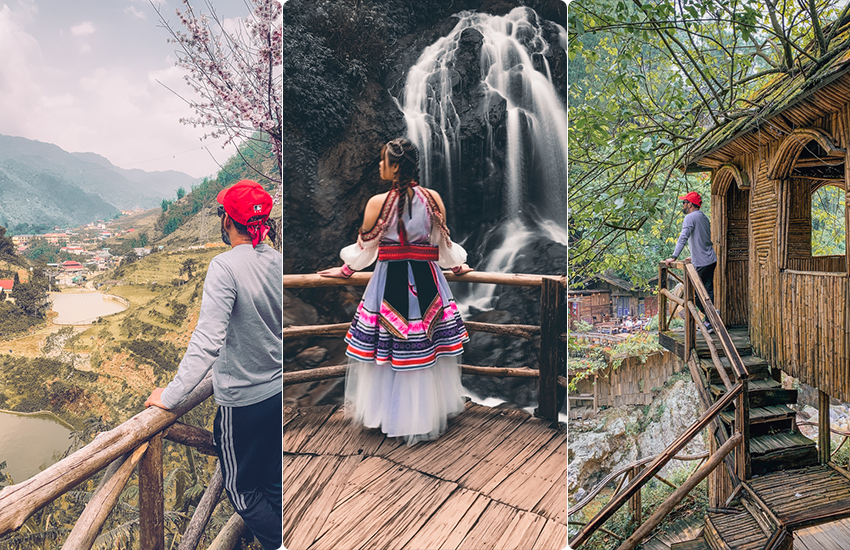
- Best light: 7:00–9:00am (soft, directional, before crowds arrive)
- Crowd window: After 10:00am tour groups fill the loop path — weekends especially
- Entrance fee: 150,000 VND adults
- Outfit tip: Deep tones work against the indigo textiles and dark wood
The stone path down to the waterfall is steep and damp even in dry weather. At the bottom, the falls open up wider than I expected — not elegant, just loud and white and cold against your face if you stand close. The Black Hmong women selling indigo cloth nearby don’t stop weaving when tourists walk by. They don’t look up either.
Tip
- Go anti-clockwise around the loop — most people go clockwise, so you’ll meet foot traffic head-on if you follow the crowd
- The return walk uphill is steep. A motorbike taxi from the exit costs around 50,000–60,000 VND
- Be honest with yourself: this is a managed tourist circuit, not a working village. It’s still worth it, but arrive knowing that
Fansipan: Above the Cloud Line
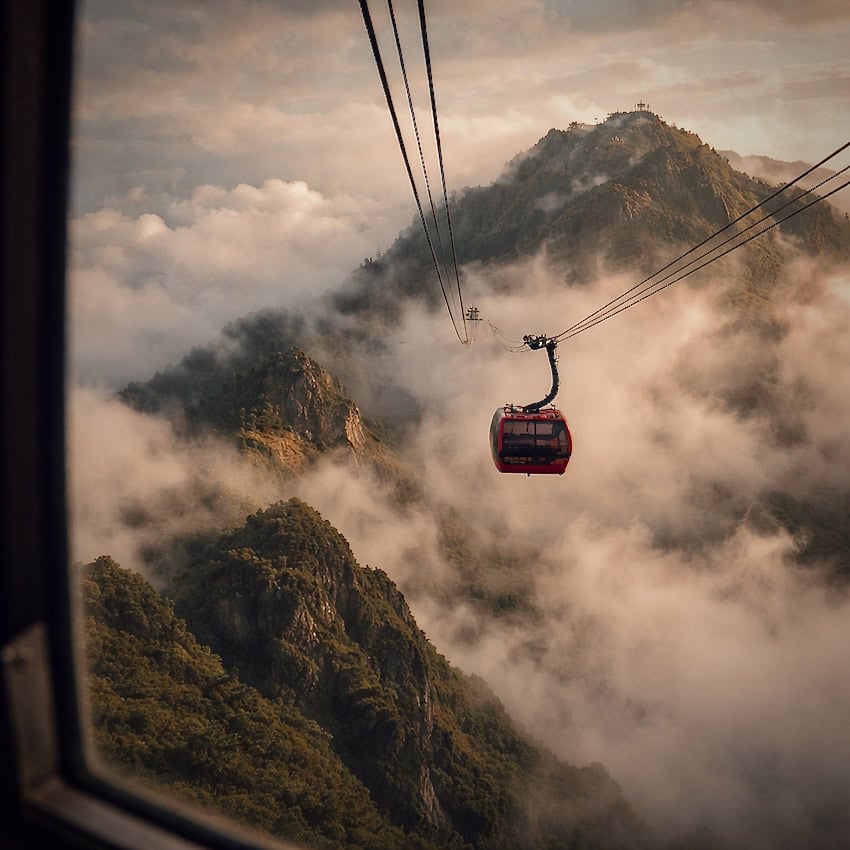
- Best light: 10:00am–noon on clear days, when fog briefly lifts
- Cable car ticket: 790,000 VND adults (weekdays), 850,000 VND Saturdays and holidays
- Crowd window: Book online in advance — queues without a ticket can be long
- Altitude: 3,147m above sea level
The cable car cabin holds about 35 people and the ride takes 15 minutes. Halfway up, the trees disappear and you’re moving through nothing — just white mist on all sides and the thin cable above. At the summit, the air has a different weight to it. The incense burning at the pagoda mixes with cold wind coming off the Hoang Lien Son range. On a clear day the horizon goes further than you think Vietnam should go.
Tip
- Fog can close in within minutes. Check the weather forecast the morning of your visit, not the night before
- Midday gives you the best odds of clear views — don’t go at 8:00am expecting a clean shot
- The Fansipan Funicular (additional 150,000 VND) gets you to the peak without climbing 600+ steps. Worth it.
Muong Hoa Valley: The Terrace Shot Everyone Comes For
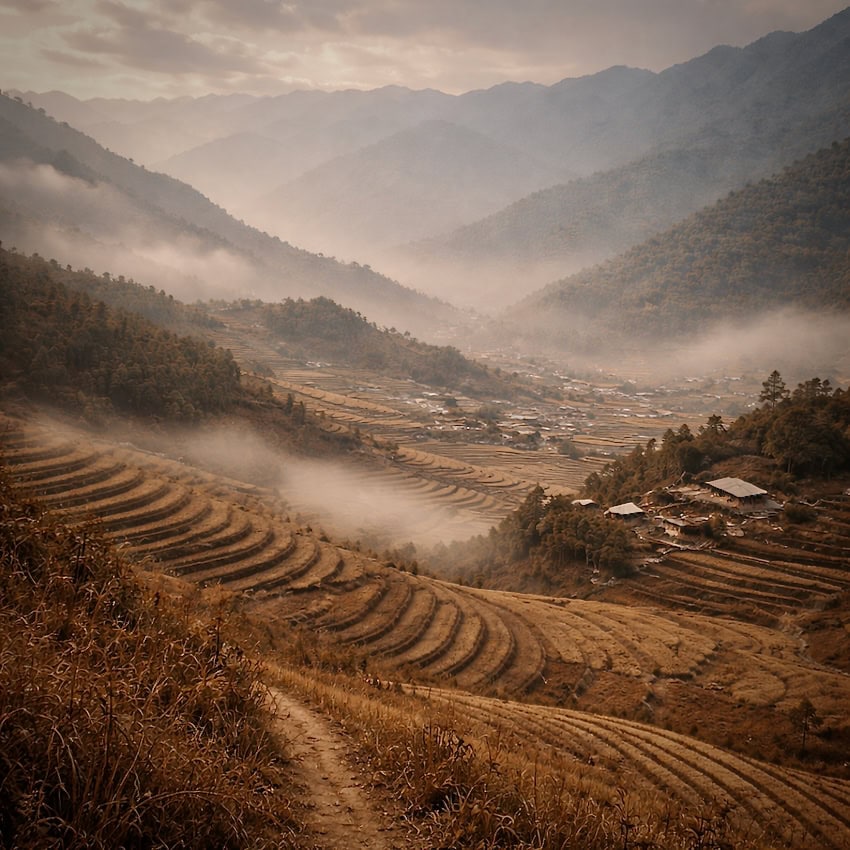
- Best light: Golden hour — 5:00–6:30pm in September and October when terraces turn yellow
- Best season: Late September to mid-October (harvest gold) or May to June (lush green)
- Crowd window: Midday is worst — tour groups come through between 10:00am and 2:00pm
The valley is 15 kilometers of terraced slopes following the Muong Hoa River. From the road above, the scale of it is hard to process. In late September the fields go amber and The Mud smells like rice and rain. I walked part of the trek through Ta Van Village and the path was ankle-deep in places — not unpleasant, just something to know before you wear your good shoes.
Tip
- A drone gets the full scale. On foot, you need to climb above the terraces to understand the layout
- Visit during planting season (May–June) for vivid green or harvest season (September–October) for gold
Moana Sapa: Art Installations with a Valley Backdrop
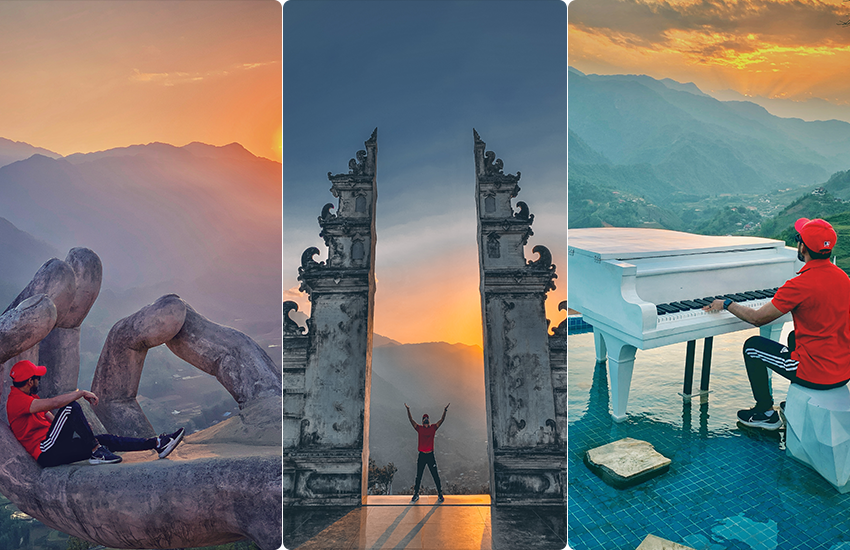
- Best light: Late afternoon — the valley behind the swing fills with warm light after 3:00pm
- Crowd window: Busiest on weekends; weekday mornings are quiet
- Distance from town: About 2–3km from Sapa center
Moana Sapa is a commercial photo venue — giant hand sculpture, infinity swing, miniature installations — all positioned in front of the Hoang Lien Son range. It works. The swing gives you the feeling of hanging out over the valley, and the mountains fill the background frame. The fog that rolls in mid-afternoon either ruins the shot or makes it better, depending on What You were going for.
Tip
- Come with an outfit in mind. The neutral mountain backdrop makes bold or white clothing stand out cleanest
- The giant hand sculpture is the most distinctive shot here — position yourself at ground level looking up for scale
O Quy Ho Pass (Heaven's Gate): The Road That Earns Its View
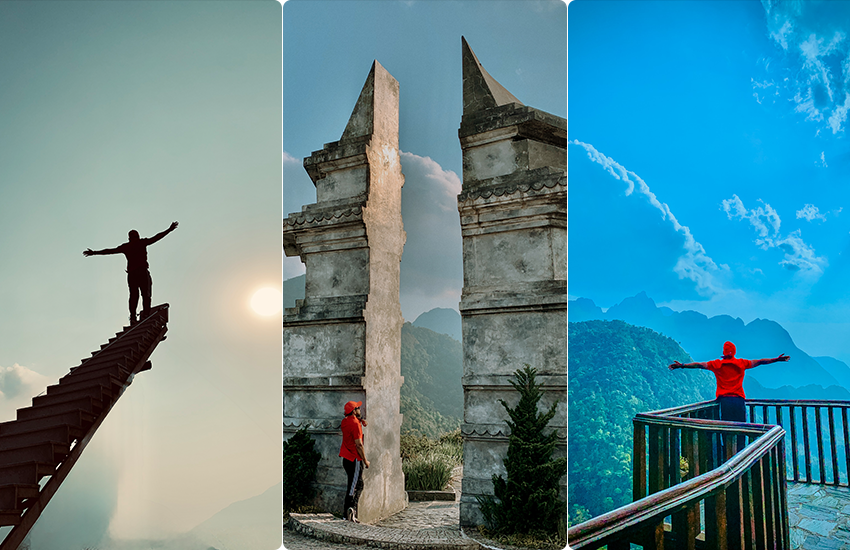
- Best light: 10:00am or sunset — fog often clears briefly at both windows
- Heaven’s Gate entry: 120,000 VND per person. The pass road itself is free and public
- Distance from town: 15–20km from Sapa; 15 minutes by motorbike
- Crowd window: Weekday mornings are nearly empty
The pass sits at roughly 2,000 meters. On a clear day — and I mean properly clear, not just not-raining — you can see the Hoang Lien Son range from one end of your vision to the other. The road curves in a way that puts the mountains in front and below you at the same time. I stopped the bike at a pull-off that wasn’t marked on any map and just stood there for a while. No one else stopped.
Tip
- Rent a motorbike in Sapa town (100,000–150,000 VND/day) for full freedom to stop anywhere along the road
- Check weather carefully — fog can close in fast and there’s nothing to see when it does
- Combine with Silver Waterfall on the same ride — it’s 12km from town on the same highway
Secret Garden Sapa: The Lonely Tree and the Infinity Edge

- Best light: Early morning — the misty valley is clearest before 9:00am
- Distance from Stone Church: About 500m — walkable from the center
- What it is: A homestay-café with a sky swing, bubble houses, and a notable lone tree on a ridge
The famous lonely tree is a single bare trunk on the edge of a hill, with the entire valley behind it. In mist it looks like a painting someone left unfinished. The infinity pool at the edge of the property looks directly down into Muong Hoa Valley — on a clear morning the surface of the water reflects the sky and the tree in the same frame.
Tip
- Order a coffee — the café is how they keep the place running, and the views from the terrace are as good as anywhere on the property
- Arrive by 7:30am on clear days. By 9:00am it fills up with photo groups
Swing Sapa: Flying Over the Valley

- Best light: Golden hour — sunrise or around 5:00pm
- Crowd window: Weekday mornings see the lightest traffic
- What to bring: Something bright — the green valley backdrop absorbs muted colors
The swing at Swing Sapa extends out over a slope with unobstructed valley views below. At full arc you’re effectively hanging above the Hoang Lien Son mountain spread. It’s not subtle and it’s not trying to be — but the frame is genuinely strong. At sunrise the light comes up low over the peaks and the whole thing turns gold.
Ta Van Village: The Quiet End of the Valley
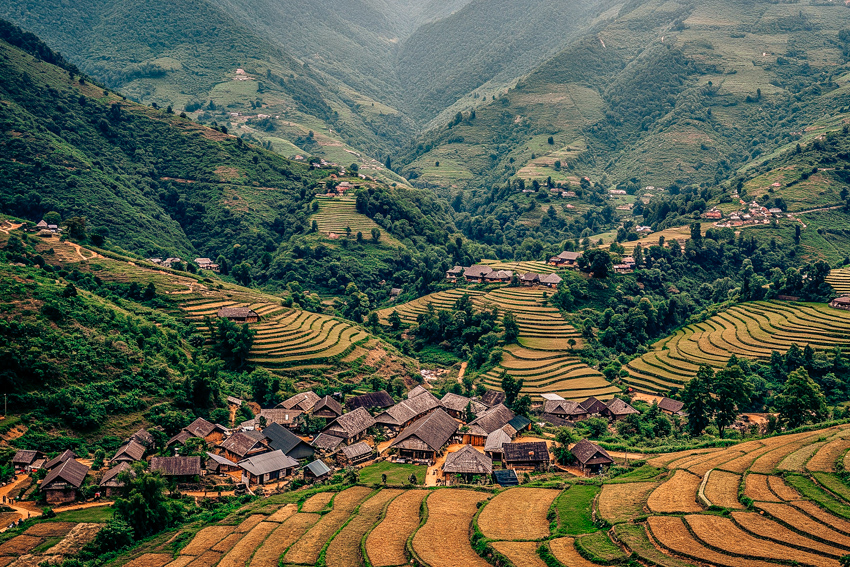
- Best light: Afternoon, when the sun falls across the field terraces from the west
- Distance from Sapa: About 8km — reachable by motorbike or guided trek
- Best season: Harvest season (September–October) for gold fields; May–June for green
Ta Van is further from town than Cat Cat, which means fewer day-trippers. The rice terraces come right up to the edge of the village path and in October they’re the color of old paper. I walked through late in the day when the light was low and the smoke from cooking fires was coming out of the wooden houses. The whole place smelled like charcoal and wet grass.
Tip
- Ta Van is a real working village, not a tourist circuit — ask before photographing people directly
- A guided trek from Sapa (usually 3–4 hours each way) gives you access to the elevated viewpoints above the village
Sun Plaza Gate: The Yellow Arch in Town
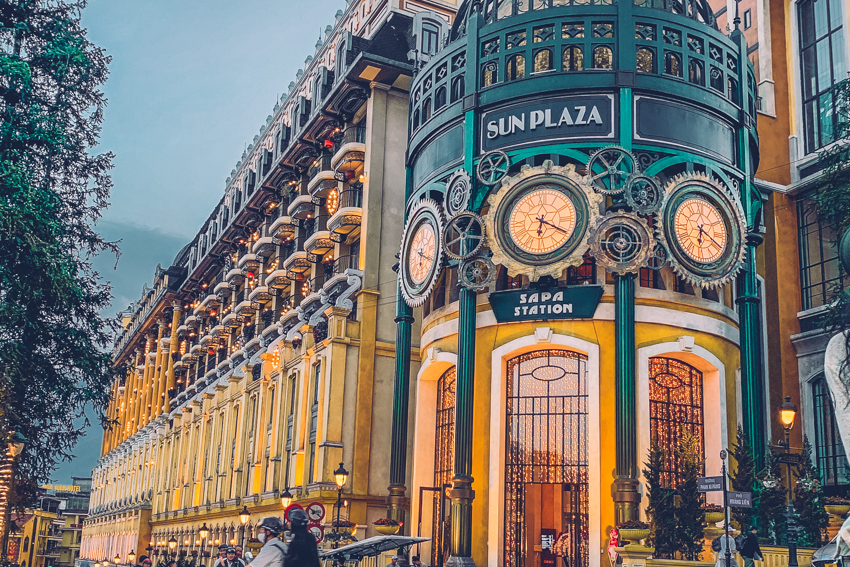
- Best light: Blue hour — 6:00–6:30pm, when the building lights up and the sky goes deep blue
- Location: Sapa town center — walkable from nearly every hotel
- Crowd window: Early morning or early evening. Midday it’s just crowds and harsh light
Sun Plaza is the yellow European-style arch that houses the Muong Hoa Monorail station. It’s big, it’s yellow, it’s deliberately photogenic. At blue hour the building lights make the arch glow against the darkening sky and the mountain silhouette behind it. It’s a contrast shot — the colonial architecture against the Hoang Lien Son backdrop — and it works better than it has any right to.
Silver Waterfall: The Fastest Stop on the O Quy Ho Road
- Best light: Morning — sun hits the falls from the east before noon
- Entrance fee: 20,000 VND adults
- Opening hours: 8:30am–5:00pm
- Distance from Sapa: 12km along Highway 4D toward Lai Chau
- Drop height: 200 meters
The waterfall sits at 1,800 meters altitude at the base of O Quy Ho Pass. You hear it before you see it — a low roar from behind the pine trees on the roadside. After the 300-step climb to the upper bridge, the full drop comes into frame: white water against dark rock, with the Hoang Lien Son range behind it. In summer the volume doubles and the mist soaks you within ten meters.
Tip
- Combine this with O Quy Ho Pass on a single motorbike loop from Sapa — same road, 30 minutes further
- Slow shutter speed turns the water silky. If you’re shooting on a phone, use night mode or a mini tripod
Muong Hoa Valley at Ta Phin Road: The Underrated Viewpoint
- Best light: Golden hour, September–October for the harvest color
- How to get there: Motorbike from Sapa, 12km toward Ta Phin Village
- No entry fee — this is a roadside viewpoint, not a paid attraction
Most guides send you straight to the valley floor. The better frame is from above. The road to Ta Phin climbs above the terraces and gives you a wide-angle view of the full valley spread — layers of fields stepping down to the river, villages in the distance, Fansipan behind it all on a clear day. I stopped at a pull-off with no sign and no other tourists and got the best terrace shot of the entire trip.
Conclusion
Sapa’s best photo spots share one thing: the light changes fast and the fog doesn’t announce itself. Every location on this list has a version before 7:00am versus 11:00am. The photographers who get the shots they came for are the ones who check the weather the night before, set an alarm, and move early.