
I didn’t know what to expect from Georgia the first time I went. I knew it was in the Caucasus, somewhere between Europe and Asia, and that the food was supposed to be good. What I found was a country that was easier to travel than I expected, cheaper than almost anywhere comparable, and more historically layered than a week could properly cover. This Georgia travel guide covers everything you need before you book — visa, budget, safety, transport, cities, and what the country is actually like to move through.
Is Georgia Easy to Travel?
- Difficulty level: Easy to moderate for independent travelers
- English spoken: Widely in Tbilisi and tourist areas. Less so in rural areas and smaller cities.
- Signage: Major roads and attractions have English signage. Side streets and rural areas use Georgian script only.
- Apps that help: Google Maps works well throughout. Bolt and Yandex cover taxis in all major cities. Google Translate handles Georgian script reasonably well.
- Traveler type it suits: Solo travelers, couples, small groups, adventure hikers, history lovers, food travelers
Georgia is one of the more straightforward countries to travel independently in this part of the world. The infrastructure for tourists is solid in the main cities, prices are low enough that mistakes don’t hurt badly, and these essential travel to Georgia tips will help you navigate smoothly. The script is completely unfamiliar if you haven’t seen it before — Georgian looks like nothing else — but that stops being a problem quickly once you have Google Translate on your phone. The country rewards slow travel more than rushing. One week covers the essentials. Two weeks covers it properly.
Tip
- Download Google Maps offline for Georgia before you arrive — coverage is reliable but data roaming costs add up
- Learn three words in Georgian: gmadlobt (thank you), gamarjoba (hello), ara (no). Locals respond warmly to any attempt.
Visa: Who Needs One and Who Doesn't
- Visa-free countries: Most EU nationals, UK, US, Canada, Australia, and many others get 365 days visa-free
- Visa on arrival: Available for some nationalities at Tbilisi airport and land borders
- E-visa: Available online for nationalities not covered by visa-free or visa on arrival
- Check your status: evisa.gov.ge is the official Georgian government e-visa portal
- Passport validity: Must be valid for the duration of your stay — no minimum beyond that for most nationalities
Georgia has one of the more generous visa policies in the region. Most Western passport holders walk through immigration with no paperwork at all. If you’re not sure whether your nationality qualifies for visa-free entry, check the official e-visa portal before booking. The process for those who need a visa is straightforward and can be done entirely online before you travel.
Tip
- Always verify current visa rules before travel — policies update and the official government portal has the most accurate information
- Land border crossings from Turkey and Armenia are busy in summer — allow extra time
Best Time to Visit Georgia
- Spring (April – June): Best overall. Mild temperatures, green landscapes, fewer crowds than summer. Good for hiking and cities.
- Summer (July – August): Peak season. Batumi beach at its best. Kazbegi trails fully open. Tbilisi gets hot. Prices higher.
- Autumn (September – October): Second best window. Wine harvest in Kakheti. Cooler temperatures. Crowds dropping.
- Winter (November – March): Cold in Tbilisi, snow in Kazbegi and the mountains. Batumi mild but grey. Ski season in Gudauri.
Spring and autumn are the windows most independent travelers prefer. The heat is manageable, the landscapes are at their most photogenic, and the cities aren’t operating at full tourist capacity. Summer works if Batumi or Kazbegi hiking is the main goal. Winter works if skiing is the plan or you want Tbilisi almost entirely to yourself. There is no genuinely bad time to visit Georgia — just different versions of the same country depending on the season.
Currency and Budget
- Currency: Georgian Lari (GEL). As of 2026, roughly 1 USD = 2.7 GEL / 1 EUR = 3 GEL
- ATMs: Widely available in cities. TBC Bank and Bank of Georgia are the most reliable.
- Cards: Accepted in most hotels, restaurants, and shops in Tbilisi and Batumi. Cash preferred in smaller cities, guesthouses, and rural areas.
- Daily budget (budget traveler): 80–120 GEL per day
- Daily budget (mid-range): 180–280 GEL per day
- What’s cheap: Food, local transport, guesthouses, wine
- What’s not: Private transfers, adventure tours, some mountain accommodation in peak season
Georgia is genuinely affordable by any standard. A full meal at a local restaurant costs 20–35 GEL. A guesthouse bed with breakfast runs 60–100 GEL. A Bolt across Tbilisi costs 5–8 GEL. The places where costs climb are private transfers between cities and adventure activities in the mountains. Everything else stays low enough that budget overruns are hard to achieve without trying. For a deeper breakdown of costs by city and activity, read the Georgia on a Budget guide.
Safety in Georgia
- Overall: Safe for independent travelers including solo women
- Petty theft: Low by European standards. Crowded areas in Tbilisi and Batumi require normal awareness.
- Road safety: The main concern. Georgian driving is aggressive by Western standards. Use licensed taxis and apps.
- Mountain safety: Weather changes fast in Kazbegi and the Caucasus. Always check conditions before hiking.
- Political situation: Stable for travelers. South Ossetia and Abkhazia are occupied territories — Do not attempt to enter from the Georgian side.
Georgia is one of the safer countries in this part of the world for independent travel. Violent crime toward tourists is rare. The risks are practical rather serious — road conditions, mountain weather, and the occasional pickpocket in crowded areas. Solo female travelers move through Georgia without significant issues, particularly in Tbilisi and Batumi. The one firm rule is the occupied territories. South Ossetia and Abkhazia are off-limits from the Georgian side with no exceptions.
Getting a SIM Card
- Best networks: Magti and Geocell both offer reliable coverage in cities and main tourist areas
- Where to buy: Tbilisi airport arrivals hall, or any network shop in the city center
- Cost: Around 15–25 GEL for a SIM with data included
- Coverage: Strong in Tbilisi, Batumi, and main roads. Patchy in remote mountain areas including parts of Kazbegi.
- Passport required: Yes — bring it to register the SIM
Buy a local SIM at the airport on arrival. The process takes five minutes, costs under 25 GEL, and gives you reliable data for the duration of a standard trip. Bolt, Google Maps, and WhatsApp work immediately after activation. In Kazbegi and remote mountain areas expect gaps in coverage — download offline maps before you leave the city.
Getting Around Georgia
- Between cities: Marshrutka (shared minivan) is the standard budget option. Private transfers are more comfortable. High-speed Stadler train for Tbilisi to Batumi.
- Within cities: Bolt and Yandex in all major cities. Tbilisi also has a metro system covering the main tourist areas.
- Renting a car: Best option for Kazbegi and mountain areas where taxis are limited. A 4×4 is needed for valley roads.
- Tbilisi to Batumi: High-speed Stadler train — the best transport decision in Georgia. Read the full guide: How to Get from Tbilisi to Batumi
- Tbilisi to Kazbegi: Private transfer or rental car recommended. Read the full guide: How to Get from Tbilisi to Kazbegi
Georgia is compact enough that moving between cities is straightforward and rarely expensive. Marshrutkas cover most routes for 10–20 GEL. Private transfers cost more but give you flexibility, stops on the way, and door-to-door service. The modern high-speed Stadler train to Batumi is an exceptional transport option that connects the capital to the coast comfortably in about 5 hours.
The Cities Worth Your Time
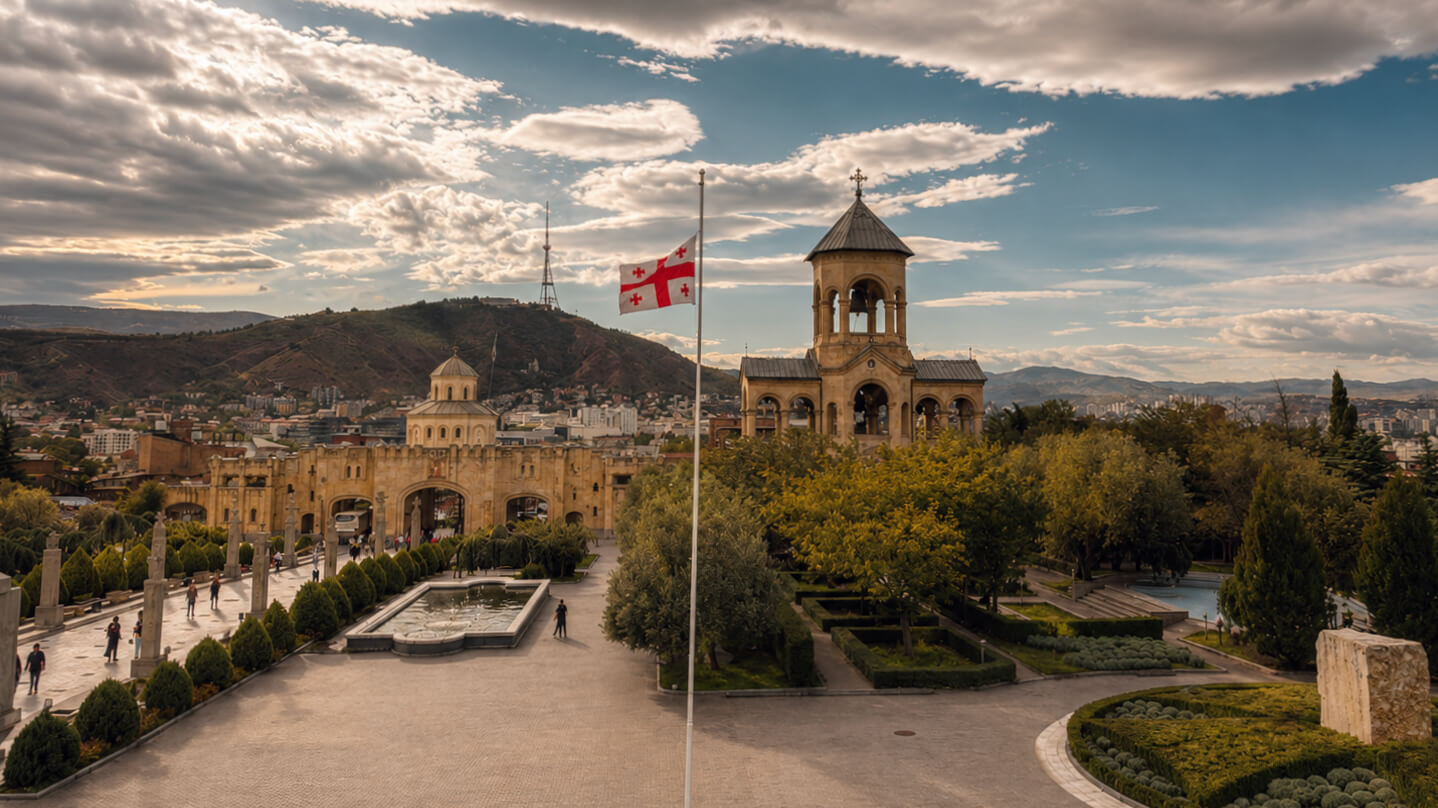
- Tbilisi: The capital. Old Town, sulfur baths, cable car, food scene, nightlife, history. Minimum 3 nights. Things to Do in Tbilisi / Where to Stay in Tbilisi
- Batumi: Black Sea coast. Boulevard, Old Town, Turkish influence, beach, nightlife. Minimum 2 nights. Things to Do in Batumi / Where to Stay in Batumi
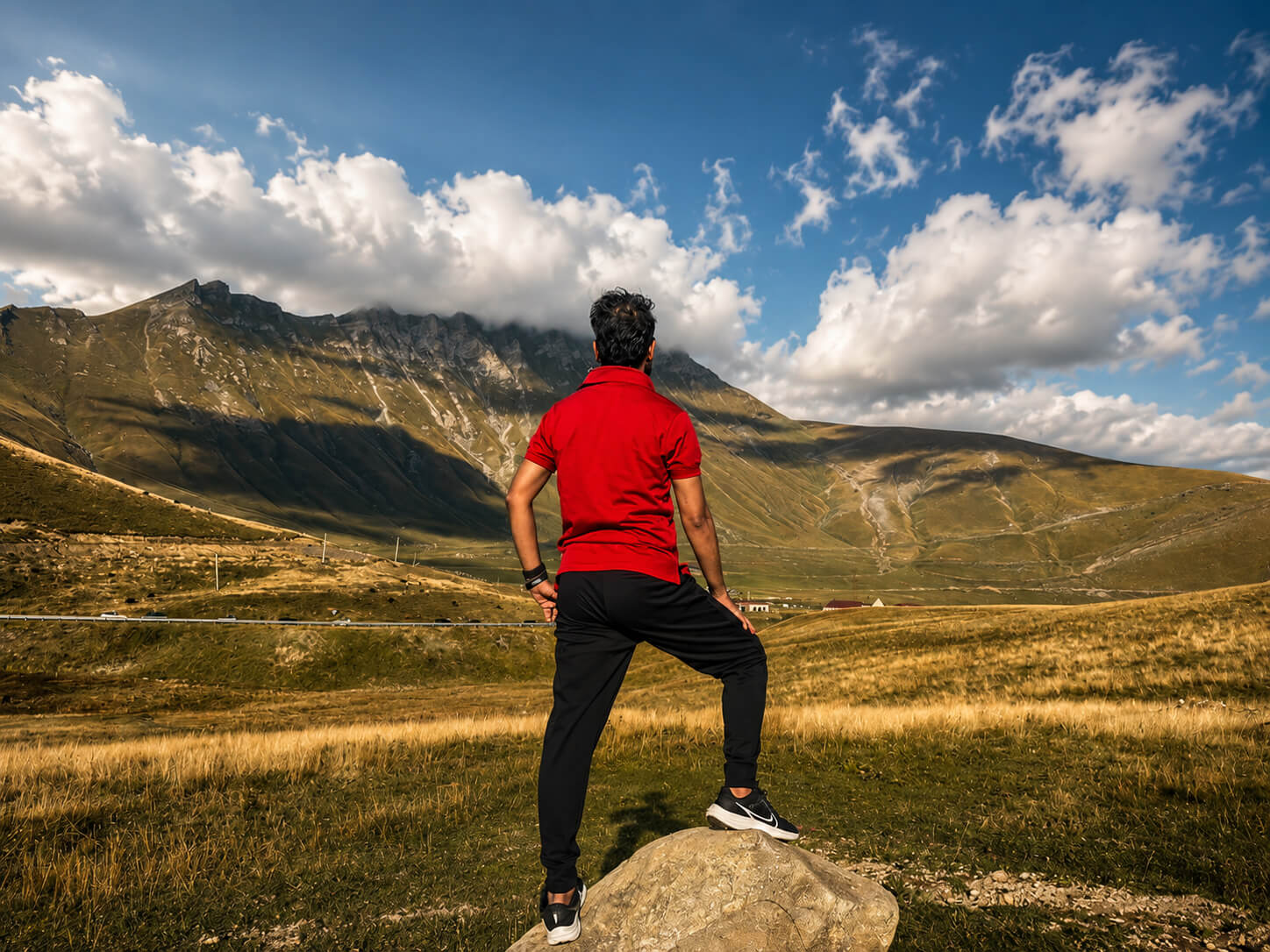
- Kazbegi: Caucasus mountains. Gergeti Trinity Church, Juta valley, hiking. Minimum 2 nights. Things to Do in Kazbegi / Where to Stay in Kazbegi
- Kutaisi: Second city. Bagrati Cathedral, Prometheus Cave, Okatse Canyon. Minimum 1–2 nights. Things to Do in Kutaisi / Where to Stay in Kutaisi
Most first-time visitors to Georgia cover Tbilisi, Batumi, and Kazbegi in one trip. That combination gives you the capital, the coast, and the mountains — three completely different versions of the country in one itinerary. Kutaisi adds a fourth dimension if you have the time. Each city is covered in full detail in the individual guides linked above.
Day Trips Worth Taking
- Mtskheta: Ancient capital, 20 km from Tbilisi. Half-day. UNESCO churches, Georgian history. Mtskheta Day Trip Guide
- Georgia Chronicles Monument: Massive carved stone monument, 8 km from Tbilisi center. Half-morning. Best before 9am. Full Guide Here
Both day trips sit close enough to Tbilisi that you can do them on the same day and still have an evening in the city. The Chronicles Monument works best as an early morning trip — arrive at 7:30am, leave by 9:30am, and have the rest of the day free. Mtskheta works better mid-morning when the light is good on the cathedral exterior.
Food: What to Eat in Georgia
- Khinkali: Soup dumplings. Twisted at the top. You eat the body and leave the knot. Order by the piece — 5–10 per person is standard.
- Khachapuri: Cheese bread. The Adjarian version (from Batumi) comes as a bread boat filled with melted cheese and a raw egg dropped in at the table.
- Mtsvadi: Georgian kebab. Pork or beef skewers grilled over open fire.
- Churchkhela: Walnuts threaded on a string and dipped in grape juice until it sets. Sold everywhere as a snack.
- Georgian wine: One of the oldest wine cultures in the world. Amber wine (skin-contact white) is the local style worth trying. Order by the jug in traditional restaurants.
- Average meal cost: 20–35 GEL at a local restaurant. 50–80 GEL at a mid-range place with wine.
Georgian food is the thing most travelers say they didn’t expect to love as much as they did. The combination of walnut sauces, fresh herbs, open-fire meat, and cheese-filled bread sits somewhere between Mediterranean and Middle Eastern and tastes like neither. Every city has the same core dishes but executes them differently. The best khinkali I had was in Tbilisi at a place with no English menu and plastic chairs. The best khachapuri was in Batumi where the Adjarian version is made the way it was designed to be.
Tip
- Ask for the local wine rather than the menu wine in traditional restaurants — it’s usually homemade, cheaper, and better
- Eat where locals eat. If the menu is only in Georgian, that’s usually a good sign.
- Vegetarians are well served — Georgian cuisine has strong vegetable dishes including lobiani (bean bread) and pkhali (walnut and vegetable balls)
Photography in Georgia
- Best cities for photography: Tbilisi Old Town, Batumi boulevard, Kazbegi valley
- Best landscapes: Kazbegi mountains, Juta valley, Georgian Military Highway
- Best architecture: Tbilisi balconies, Batumi Art Nouveau, Mtskheta Cathedral, Georgia Chronicles Monument
- Golden hour: Tbilisi cable car area at sunset. Batumi boulevard at 7pm. Kazbegi valley at 6:30am.
Georgia is one of the more photogenic countries in this part of the world and most of it requires no special planning — the streets, the mountains, the food, and the people are consistently worth photographing. Each city has its own dedicated photo guide linked below with specific positions, angles, and timing for every major location.
Suggested First Timer Itinerary
Days 1–3: Tbilisi. Old Town, cable car, Chronicles Monument morning, sulfur baths, food. Day 4: Mtskheta half-morning, then high-speed Stadler train to Batumi. Days 5–6: Batumi. Boulevard, Old Town, scooter, Ali and Nino. Day 7: Train back to Tbilisi, fly home or continue to Kazbegi. Add 2 nights in Kazbegi if you have the time — it’s the part of Georgia most people say they wish they’d spent longer in.
Georgia is one of those countries that surprises travelers who arrive without strong expectations and rewards those who stay longer than planned. The food is better than you think. The mountains are bigger than the photographs suggest. The cities are cheaper than almost anywhere comparable in Europe or the Middle East. Start in Tbilisi, take the high-speed train to Batumi, get to Kazbegi if you can. The rest figures itself out on the ground.